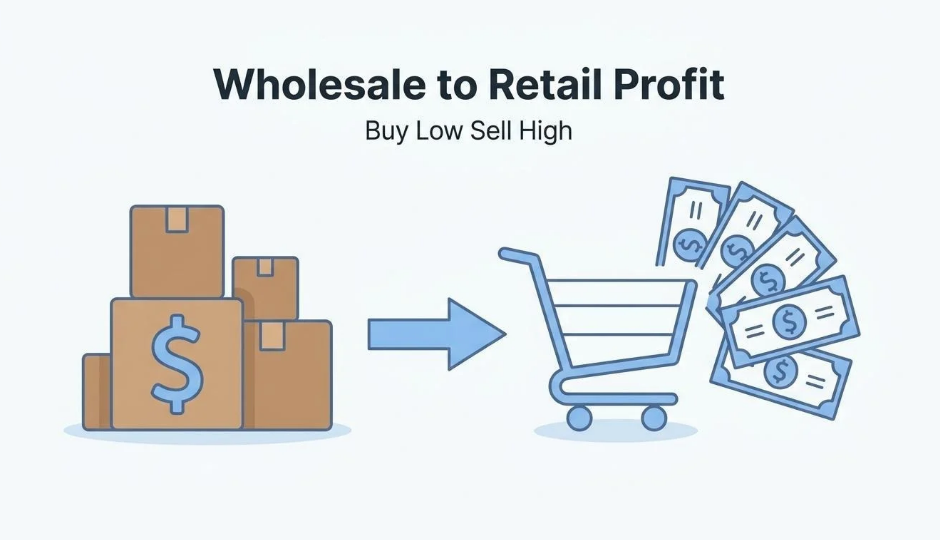
Cheap wholesale products for resale are bulk-purchased goods bought at below-retail unit prices from manufacturers, distributors, or wholesale marketplaces, then sold individually to consumers at a markup. The profit comes from the spread between landed cost and retail selling price.
This guide covers product category selection, supplier sourcing and quality verification, margin calculation and pricing strategy, legal and tax compliance for US resellers, and inventory management paired with operational scaling.
Fashion accessories, beauty products, phone cases, home décor, sunglasses, jewelry, supplements, pet supplies, toys, and cleaning essentials each carry distinct margin profiles. Apparel averages roughly 57% gross margin, pet spending in the US hit $158 billion in 2024, and global toy sales reached $123 billion in 2025. Matching category demand patterns to your capital and channel strategy determines which products actually generate profit.
Reliable suppliers exist across domestic wholesale marketplaces, overseas manufacturers, liquidation channels, and trade shows. Evaluating quality before committing to bulk orders requires paid samples, supplier review analysis, and counterfeit detection checks, especially for regulated categories like supplements and electronics.
Accurate margin calculation starts with landed cost, not invoice price. Shipping, tariffs, insurance, platform fees, and fulfillment expenses all compress margins on low-cost goods. Bulk discounts only justify larger orders when demand predictability is high and holding costs stay low.
US resellers need state-specific resale certificates, sales tax permits tied to economic nexus thresholds, and federal compliance documentation for regulated product categories. Skipping these steps creates retroactive tax liability and marketplace suspensions.
Preventing overstock depends on real-time inventory tracking, hybrid fulfillment strategies, and reorder points tied to actual sell-through velocity. Consolidating storefront, CRM, and POS data into a unified system replaces the manual reconciliation that stalls growth as order volume scales.
Buying wholesale for resale means purchasing products in bulk from manufacturers, distributors, or wholesale marketplaces at below-retail unit prices, then selling those items individually to end consumers at a markup. The reseller earns profit from the spread between the wholesale cost per unit and the final selling price.
This model requires a few core elements working together. The reseller secures a resale certificate or sales-tax permit (requirements vary by state), which allows tax-exempt purchasing from suppliers. Products are then listed through one or more sales channels: an online storefront, a marketplace listing, social commerce, or in-person events. Each unit sold captures the difference between landed cost and retail price as gross margin.
Landed cost is a critical concept here, not just the price on the supplier's invoice. According to the International Trade Administration at the U.S. Department of Commerce, landed cost is the total price of a product once it arrives at the buyer's doorstep, including the original product price, insurance, freight, tariffs and taxes, and other fees. Overlooking any of these components leads resellers to underprice inventory and erode margins before their first sale.
What separates wholesale-for-resale from standard retail purchasing is volume commitment. Suppliers offer lower per-unit pricing because bulk orders reduce their own sales, packaging, and logistics costs. In return, the reseller assumes inventory risk: unsold stock ties up capital. Successful resellers balance order size against realistic sell-through rates, keeping enough inventory to meet demand without overcommitting cash to slow-moving products.
Understanding this dynamic early sets the foundation for every decision that follows, from choosing product categories and vetting suppliers to calculating markup and selecting the right sales channel.
Cheap wholesale products are a profitable resale strategy because the gap between bulk purchase cost and individual retail price creates consistent margins across nearly every product category. The mechanics behind this profitability involve landed cost control, category-level demand patterns, and scalable markup structures.
The core economics are straightforward. Wholesale pricing reduces per-unit cost by removing intermediary markups that inflate retail supply chains. When a reseller purchases items in bulk at wholesale rates, the per-item cost drops significantly below what end consumers pay at retail. This spread between wholesale cost and retail selling price is where profit lives.
Landed cost determines actual profitability more than sticker price alone. According to the International Trade Administration at the U.S. Department of Commerce, landed cost is the total price of a product once it arrives at the buyer's door, including the original product price, insurance, freight, tariffs, taxes, and other fees. Resellers who calculate only the wholesale invoice price without accounting for these additional costs often overestimate their margins.
Category selection amplifies the strategy's effectiveness. Certain product categories carry structurally higher gross margins that reward resellers who source cheap wholesale inventory:
These categories share a common trait: high consumer demand paired with low per-unit wholesale costs, which widens the resale margin window.
What makes this strategy particularly accessible is the low capital barrier to entry. Unlike manufacturing or private-label product development, wholesale resale requires no product design, no tooling investment, and no minimum production runs in many cases. A reseller can test demand with a small initial order, validate sales velocity, and scale purchasing volume once a product proves profitable.
For operators managing growing resale businesses, the real unlock comes from treating wholesale sourcing as a system rather than a series of one-off purchases. Tracking landed costs per SKU, monitoring category margin benchmarks, and matching product selection to channel-specific demand patterns separates profitable resellers from those who stall at break-even.
The most popular cheap wholesale product categories include fashion accessories, beauty products, phone cases, home décor, sunglasses, jewelry, supplements, pet supplies, toys, and cleaning essentials. Each category offers distinct margin potential and demand patterns.
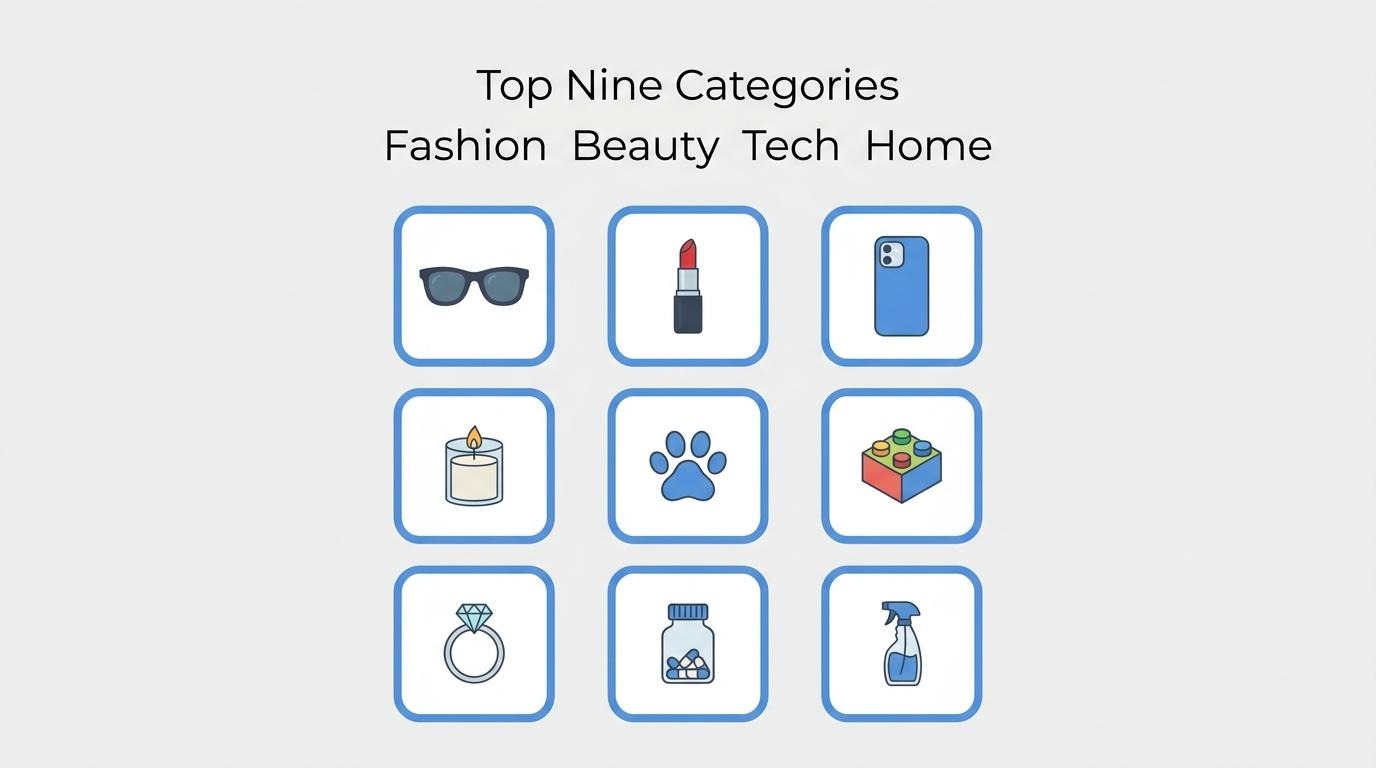
Fashion accessories and apparel represent one of the highest-volume wholesale categories for resellers. Scarves, hats, belts, and basic clothing staples carry low per-unit costs and strong seasonal demand. According to the U.S. Bureau of Labor Statistics, household spending on women's apparel averaged $655 in 2023, compared with $406 for men's apparel. This spending gap signals where resellers should focus inventory. Lightweight accessories ship cheaply and allow wide markup flexibility, making them ideal entry-level wholesale products.
Beauty and personal care products are a consistently high-demand wholesale category. Items like lip gloss, skincare sets, hair accessories, and travel-size toiletries carry low wholesale costs with retail markups often exceeding 50%. Resellers entering this space should note that states impose sales tax obligations once revenue thresholds are met; Indiana, for example, requires a registered retail merchant's certificate once gross revenue exceeds $100,000 in a calendar year, according to the Indiana Department of Revenue. Factor compliance costs into your pricing from the start.
Phone cases and electronic accessories offer some of the lowest per-unit wholesale costs in any product category. Chargers, screen protectors, earbuds, and phone grips typically cost under $2 wholesale and sell for $8 to $15 retail. New phone model releases create predictable demand spikes that resellers can time inventory around. The main risk is rapid obsolescence when device models change, so ordering smaller, frequent batches reduces dead stock exposure.
Home décor and kitchen gadgets cover a broad range of inexpensive wholesale items with consistent year-round demand. Candle holders, wall art, silicone utensils, and organizational tools all source cheaply in bulk. Gift-giving seasons amplify sales, particularly for curated bundles. These products photograph well for social commerce listings, which helps drive impulse purchases. Keeping a rotating selection prevents catalog fatigue and encourages repeat visits from buyers.
Sunglasses and eyewear rank among the highest-markup wholesale products available to resellers. Bulk-purchased fashion sunglasses can cost $1 to $3 per unit and retail between $10 and $25. Seasonal peaks during spring and summer drive concentrated demand. Because sunglasses are non-perishable and lightweight, storage costs stay minimal. Offering UV protection compliance details on listings builds buyer trust and reduces return rates, a practical step many new resellers overlook.
Jewelry and watches provide exceptional margin potential due to extremely low material costs on fashion-tier products. Wholesale rings, bracelets, necklaces, and minimalist watches often cost pennies to a few dollars per piece. Perceived value drives pricing more than production cost in this category, which rewards strong product photography and brand storytelling. Resellers who build a recognizable aesthetic around curated collections outperform those selling generic assortments.
Health and wellness supplements are a profitable but heavily regulated wholesale category. Vitamins, protein powders, herbal extracts, and wellness teas carry strong consumer demand. However, the FDA requires that structure/function claims on dietary supplements include a disclaimer stating the claim has not been FDA-evaluated, and manufacturers must submit notification within 30 days of marketing. Resellers must verify that suppliers hold proper certifications and that labeling meets federal requirements before listing any supplement product.
Pet supplies and accessories tap into a massive and growing consumer market. According to the American Pet Products Association, Americans spent $158 billion on pets in 2024. Collars, toys, grooming tools, travel bowls, and waste bag dispensers all source cheaply at wholesale. Pet owners tend to repurchase consumable items regularly, creating reliable repeat revenue. Stocking both consumables and durable accessories builds a product mix that maximizes customer lifetime value.
Toys and novelty items generate strong wholesale-to-retail margins, especially around holidays and back-to-school periods. According to The Toy Association, global toy sales reached $123.0 billion in 2025, up 8% over 2024. Fidget toys, puzzles, craft kits, and small collectibles cost very little in bulk. Novelty products also perform well as impulse-buy add-ons at checkout. Trend sensitivity is the primary risk; resellers should test small quantities before committing to large orders on viral products.
Cleaning supplies and household essentials are among the most recession-resistant wholesale categories. Sponges, spray bottles, microfiber cloths, trash bags, and all-purpose cleaners maintain demand regardless of economic conditions. Per-unit costs stay low, and consumable products drive natural reorder cycles. These items pair well with subscription or bundle strategies on your own storefront, where you control pricing without marketplace fee erosion. For resellers building a multi-category store, understanding how each product type fits your sales channel is the next critical step.
Reliable wholesale suppliers in the US can be found through domestic marketplaces, overseas manufacturers, liquidation channels, and industry trade shows. Each sourcing method offers distinct pricing, volume, and product-type advantages.
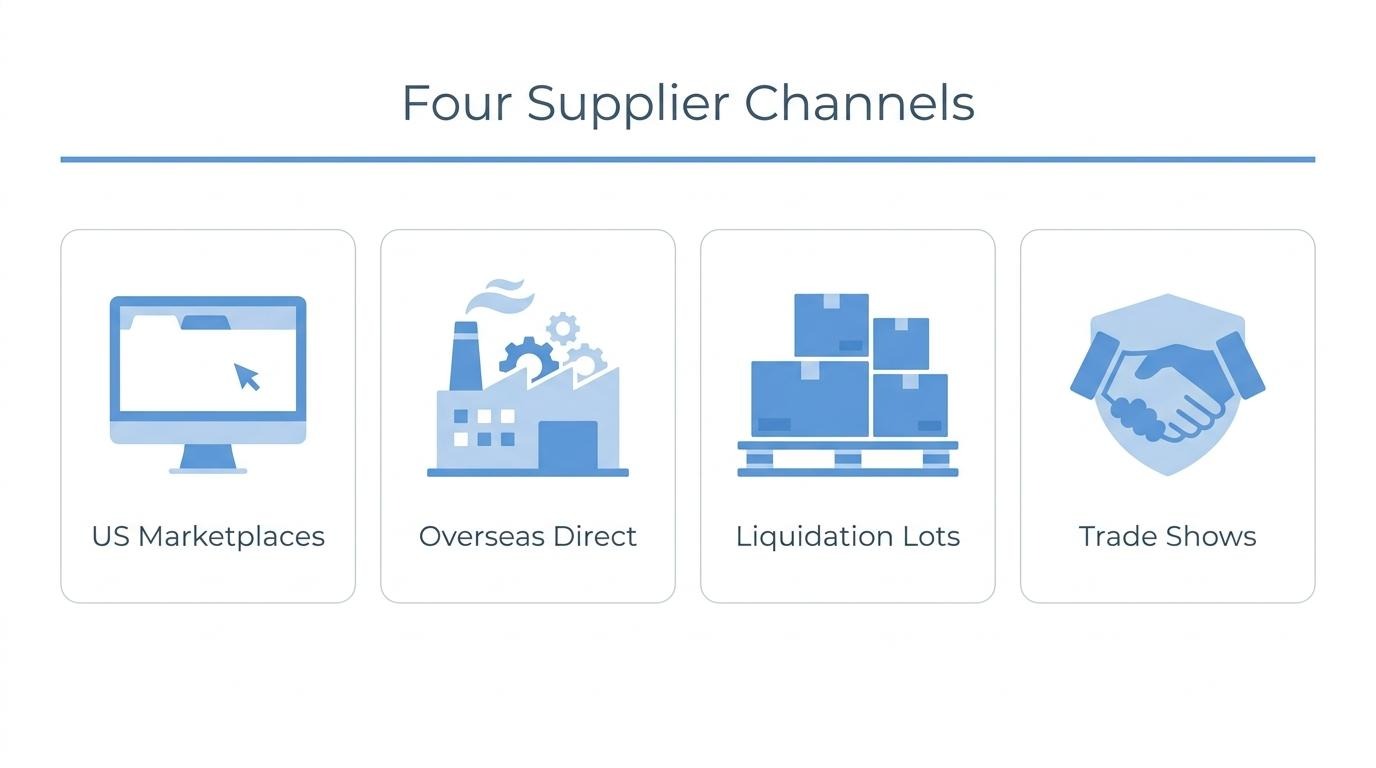
You source from domestic wholesale marketplaces by registering on B2B platforms that connect verified US distributors with retail buyers. Faire, for example, offers net 60 payment terms, letting resellers stock inventory now and pay up to 60 days later, according to the Faire Help Center. Industry-specific directories also streamline discovery; the National Association of Sporting Goods Wholesalers maintains a searchable membership directory of vetted distributors.
Key domestic sourcing channels include:
Domestic sourcing typically means faster shipping, easier returns, and fewer customs complications compared to importing.
You buy directly from overseas manufacturers by using global sourcing platforms such as Alibaba.com, where buyer membership is completely free, according to the Alibaba.com Help Center. This approach eliminates middlemen, often reducing per-unit cost by 30–60% compared to domestic wholesale pricing.
Before placing a bulk order, take these steps:
Longer lead times and import duties are trade-offs worth factoring into your landed cost calculation before committing to overseas production.
Liquidation and closeout lots work by bundling excess, returned, or end-of-season inventory from major retailers into pallets or truckloads sold at steep discounts. Resellers purchase these lots through dedicated liquidation marketplaces or directly from retailer programs, often paying 10–30% of original retail value.
The U.S. General Services Administration also sells government surplus property; for awards between $325 and $100,000, the assessed fee is $325, per GSA's published purchasing guidelines.
Considerations before buying liquidation inventory:
For resellers comfortable with sorting and grading, liquidation lots offer some of the lowest cost-per-unit sourcing available.
Trade shows help you find wholesale deals by placing hundreds of suppliers, product demonstrations, and show-exclusive pricing under one roof. Face-to-face interaction accelerates supplier vetting in ways online directories cannot replicate.
Upcoming events worth noting: the National Restaurant Association Show returns to McCormick Place in Chicago, May 16–19, 2026, drawing tens of thousands of foodservice and hospitality professionals for product discovery and networking.
Benefits of trade show sourcing include:
Attending even one or two industry trade shows per year can surface sourcing opportunities that never appear on wholesale platforms, making them a high-value investment for serious resellers.
With sourcing channels identified, the next step is verifying product quality before placing a full order.
You evaluate wholesale product quality before buying by ordering samples, reviewing supplier feedback, and verifying product authenticity. According to the International Organization for Standardization, quality assurance is the systematic process of ensuring products consistently meet defined quality requirements through planning, production, testing, packaging, and delivery. The sections below cover sample assessment, supplier reviews, and counterfeit detection.
You order and assess product samples by requesting units directly from the supplier before committing to a bulk purchase. Start with a small paid order rather than relying on free promotional samples, which may not represent standard production runs.
When evaluating samples, check for:
According to the Federal Trade Commission, the Labeling Rule applies to labels on products that make unqualified Made in USA claims, including any online or mail order materials featuring a seal, mark, tag, or stamp. Verify that origin claims on your samples match the documentation the supplier provides. If a sample fails on even one critical attribute, request a revised production run before placing a larger order.
You should look for consistency, recency, and specificity in supplier reviews and ratings. A supplier with hundreds of five-star reviews from three years ago but recent complaints about shipping delays or declining quality tells a very different story than one with steady positive feedback over the past six months.
Key signals to prioritize include:
Ratings alone rarely tell the full story. A 4.6-star supplier who resolves disputes quickly is often a safer bet than a 4.9-star supplier with no visible complaint-handling record. Cross-reference reviews across multiple platforms when possible, and contact two or three past buyers directly if the order volume justifies the due diligence.
You spot counterfeit or restricted products by verifying documentation, checking regulatory compliance, and comparing pricing against known wholesale benchmarks. As the OECD and the European Union Intellectual Property Office note, illicit trade in counterfeit and pirated goods damages economic growth, endangers consumers, and fuels organized crime.
Red flags that signal counterfeit or restricted inventory include:
For electronics, confirm the product carries valid FCC equipment authorization. For children's products, verify CPSC-required tracking labels. For supplements, check that structure/function claims include the required FDA disclaimer. Skipping these checks does not just risk customer returns; it exposes your business to seizure, fines, and marketplace suspension.
With quality verification processes in place, calculating accurate profit margins becomes the next critical step.
You calculate profit margins on wholesale products by subtracting total landed costs from the selling price, then dividing by the selling price. The subsections below cover markup formulas, shipping cost impact, and when bulk discounts justify inventory risk.
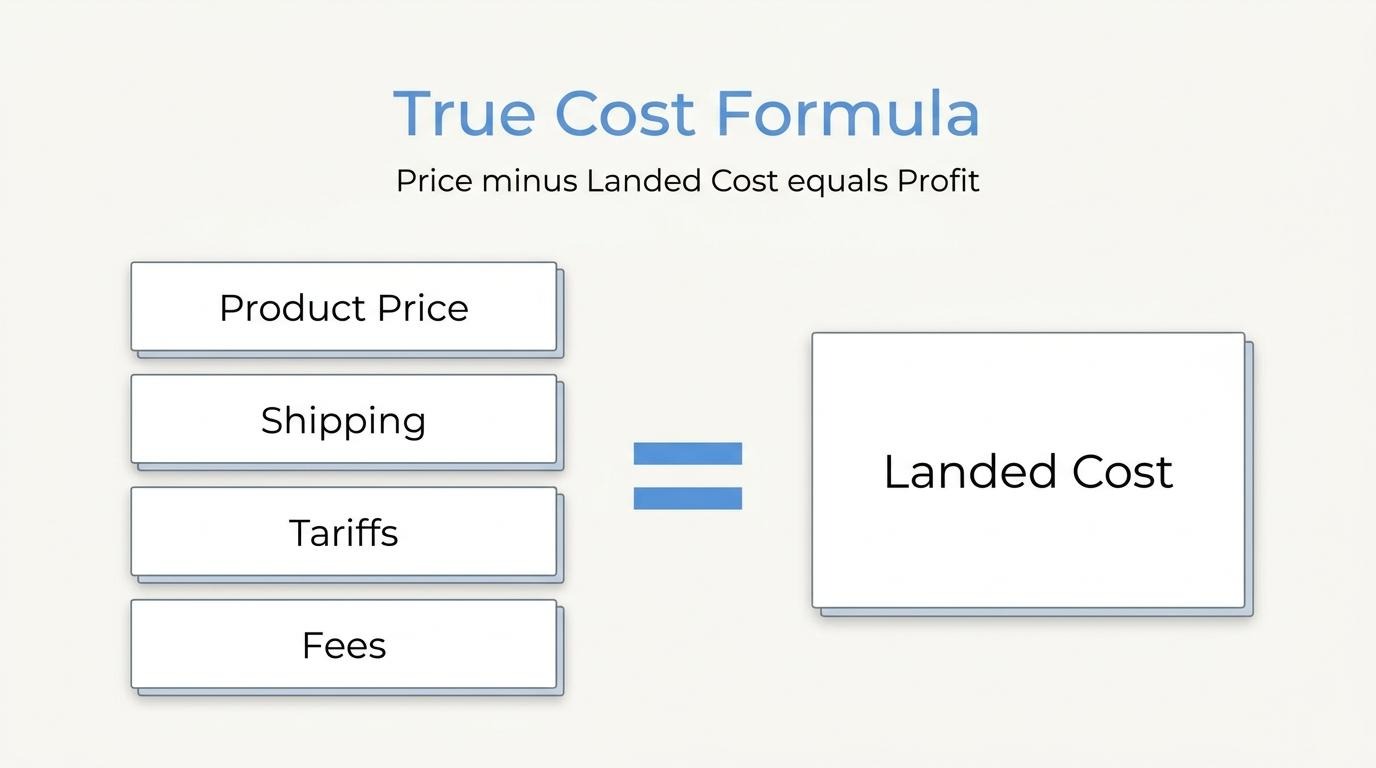
The right markup formula for cheap wholesale goods starts with landed cost, not just the unit price. Landed cost is the total price of a product once it arrives at your door, including the original product price, insurance, freight, tariffs, taxes, and other fees, according to the International Trade Administration.
To find markup percentage, subtract the landed cost from your selling price, divide by the landed cost, then multiply by 100. For margin percentage, divide that same difference by the selling price instead.
This distinction matters because wholesale margins can be thin. A product with a $3.00 landed cost selling at $9.99 carries a 70% margin, but ignoring a $1.50 shipping surcharge drops that margin to roughly 54%. Always anchor calculations to landed cost, not invoice price alone.
Shipping and fulfillment costs affect your margins by inflating landed cost and, when passed to customers, driving cart abandonment. According to research from the University of Arkansas Sam M. Walton College of Business, 58% of abandoned online shopping carts resulted from shipping costs making the total purchase price higher than expected.
Membership-based free shipping programs do not automatically offset these losses. NC State Poole College of Management found that such enrollment does not lift average consumer spending initially, because large orders simply break into smaller ones, leaving retailers with no incremental net revenue after increased shipping costs.
For cheap wholesale goods, where unit prices are already low, even a few dollars in fulfillment fees can erase the entire gross margin. Building shipping into the retail price or setting a free-shipping threshold tends to protect both conversions and profitability.
Bulk order discounts justify larger inventory risk when demand predictability is high and holding costs remain low relative to the per-unit savings. Ordering more units at a steeper discount only improves margins if you can sell through before storage, depreciation, or obsolescence eat the savings.
Excess inventory forces painful decisions. According to Professor of Marketing Jie Zhang at the University of Maryland Robert H. Smith School of Business, "Markdowns and order cancellations are quite effective in clearing up excess inventory, but they are very hurtful to retailers' bottom lines."
A hybrid approach often works best. Research published in Computers & Industrial Engineering found that a mix of holding inventory and drop shipping is frequently optimal for e-retailers, reducing holding costs and obsolescence risk while maintaining product availability.
Key signals that bulk ordering makes sense include:
For resellers scaling past manual operations, reliable inventory tracking across locations helps prevent overstock before it becomes a margin problem.
The minimum order requirements you should expect vary by supplier type, product category, and sourcing channel. Domestic wholesalers, overseas manufacturers, and liquidation platforms each set different thresholds that directly affect your startup costs and inventory risk.
Minimum order quantities (MOQs) typically fall into predictable ranges based on where you source. Overseas manufacturers on platforms like Alibaba often require 100 to 1,000 units per SKU, while domestic wholesale marketplaces may accept orders as low as 6 to 24 units. Liquidation lots sell by the pallet or truckload, with buy-ins starting around a few hundred dollars. Understanding these thresholds before committing capital prevents cash flow problems and unsold inventory.
For small resellers testing new product categories, negotiating MOQs is standard practice. Many suppliers will lower minimums for a first order in exchange for a slightly higher per-unit price. This trade-off is worth accepting when you need to validate demand before scaling. According to the United Nations Industrial Development Organization, buyers should rarely rely solely on post-delivery inspection of important or costly items; some inspection during manufacture or prior to shipment is recommended. Ordering samples before committing to full MOQs protects both quality and capital.
Category also shapes what suppliers expect. Fashion accessories and phone cases, produced at high volume with low material costs, often carry lower MOQs. Health supplements and electronics, subject to FDA and FCC compliance requirements, tend to have higher minimums because manufacturers absorb regulatory costs across larger production runs.
The smartest approach for new resellers is to start with suppliers offering flexible minimums, prove demand through small test batches, and then negotiate volume pricing once reorder patterns are established. Locking into large MOQs before understanding your sell-through rate is one of the most common capital mistakes in wholesale resale.
You choose the right resale channel by matching each product's price point, audience, and margin structure to the selling environment that maximizes profit after fees. The subsections below compare online storefronts versus marketplaces, in-person events, and social commerce.
Online storefronts compare to marketplace listings across control, cost structure, and customer ownership. A branded storefront gives you full pricing authority, direct access to buyer data, and no per-transaction referral fees beyond payment processing. Marketplace listings on platforms like Amazon or eBay provide built-in traffic but charge referral fees that compress margins on low-cost wholesale goods.
Key differences include:
For cheap wholesale products with thin margins, storefront economics often outperform marketplace listings once monthly sales volume covers the subscription cost.
Selling at in-person events or pop-ups makes sense when your product benefits from tactile evaluation, impulse buying, or a markup structure that absorbs booth costs. Accessories, jewelry, beauty items, and novelty goods perform well because shoppers can handle them before purchasing.
According to the University of Maine Cooperative Extension, markup is the difference between the cost of an item and its selling price, expressed as a percentage based on either cost or selling price. Products with markups high enough to cover booth rental, travel, and display materials are the strongest candidates for events.
Pop-ups also work well for testing new product categories before committing to larger inventory orders. If a $3 wholesale item sells consistently at $12 to $15 at local markets, that validated demand signals readiness for online scaling.
Social commerce performs well for low-cost resale items because platforms like TikTok Shop, Instagram, and Facebook reach impulse buyers already scrolling content. Products under $20 convert effectively through short-form video demonstrations and influencer partnerships, since the low price point reduces purchase hesitation.
However, social commerce adds compliance requirements. According to the Illinois Department of Revenue, retailers must keep a certificate of resale in their records to document tax-exempt wholesale purchases; buyers can complete Form CRT-61 or create their own certificate.
Sellers should also factor in platform-specific referral fees and shipping subsidies that eat into already slim margins. Social commerce works best as a volume play: high unit sales offsetting lower per-item profit. For resellers already managing multiple channels, consolidating storefront, social, and customer data into one system prevents the operational fragmentation that stalls growth.
The legal and tax requirements that apply to US resellers include obtaining state sales tax permits, filing resale certificates with suppliers, and meeting federal compliance rules for regulated product categories such as supplements, children's products, and electronics.
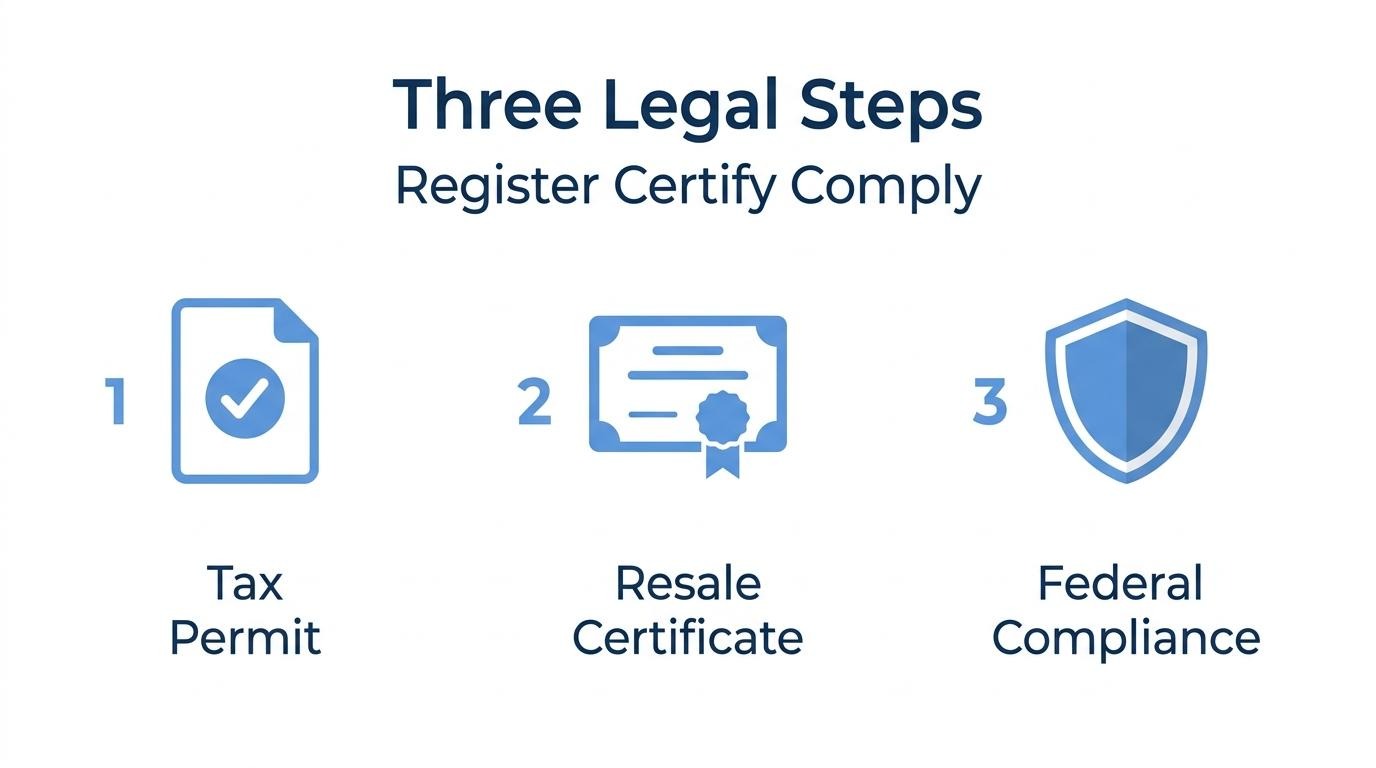
US resellers need a resale certificate or sales tax permit in every state where they have sales tax obligations. A resale certificate allows you to purchase inventory tax-free from suppliers by documenting that the goods are intended for resale, not personal use. Each state issues its own form and sets its own rules. According to the Texas Comptroller of Public Accounts, remote sellers with total Texas revenue under $500,000 in the preceding twelve calendar months are not required to obtain a tax permit or collect state and local use tax.
Key steps for resale certificate compliance include:
Many new resellers mistakenly assume a single certificate covers all states. In practice, multi-state selling requires separate registrations wherever you trigger economic nexus.
Federal rules for supplements, baby products, and electronics are enforced by separate agencies, each with distinct labeling, testing, and authorization requirements. Resellers bear responsibility for compliance even when they did not manufacture the product.
Ignoring these requirements can result in product seizures, fines, or marketplace account suspensions. For resellers sourcing cheap wholesale goods across multiple categories, building a compliance checklist per product type is one of the most practical safeguards before listing inventory for sale.
With compliance foundations in place, managing inventory levels becomes the next operational priority.
You manage inventory without overstocking by combining demand-based ordering, real-time tracking tools, and hybrid fulfillment strategies. The following subsections cover practical methods for keeping stock levels aligned with actual sell-through.
Wholesale resellers face a constant tension: ordering enough to secure bulk pricing while avoiding capital tied up in unsold goods. Small, frequent reorders based on sales velocity data reduce this risk more reliably than large, speculative purchases.
Real-time inventory tracking is the foundation of overstock prevention. Modern commerce platforms and point-of-sale systems record every sale, return, and stock adjustment automatically, giving sellers accurate counts across locations and channels. A University of Arkansas study found that an automated, RFID-enabled inventory system improved retail inventory accuracy by approximately 13 percent in test stores compared to control stores. Even without RFID, syncing inventory data between your storefront, marketplace listings, and any physical selling locations prevents overselling and highlights slow movers before they accumulate.
Hybrid fulfillment offers another layer of protection. Rather than warehousing every SKU, pairing stocked inventory with drop shipping for slower or untested products limits exposure. Research published in Computers & Industrial Engineering confirms that a mix of holding inventory and drop shipping is frequently optimal for e-retailers, reducing holding costs, materials handling, and obsolescence risk while maintaining product breadth.
When overstock does occur, act quickly. Markdowns clear excess units but erode margins. As Professor of Marketing Jie Zhang at the University of Maryland Robert H. Smith School of Business notes, "Markdowns and order cancellations are quite effective in clearing up excess inventory, but they are very hurtful to retailers' bottom lines." Bundling slow sellers with popular items, running flash sales, or redirecting overstock to a secondary channel often recovers more value than blanket discounts.
Key practices for preventing overstock include:
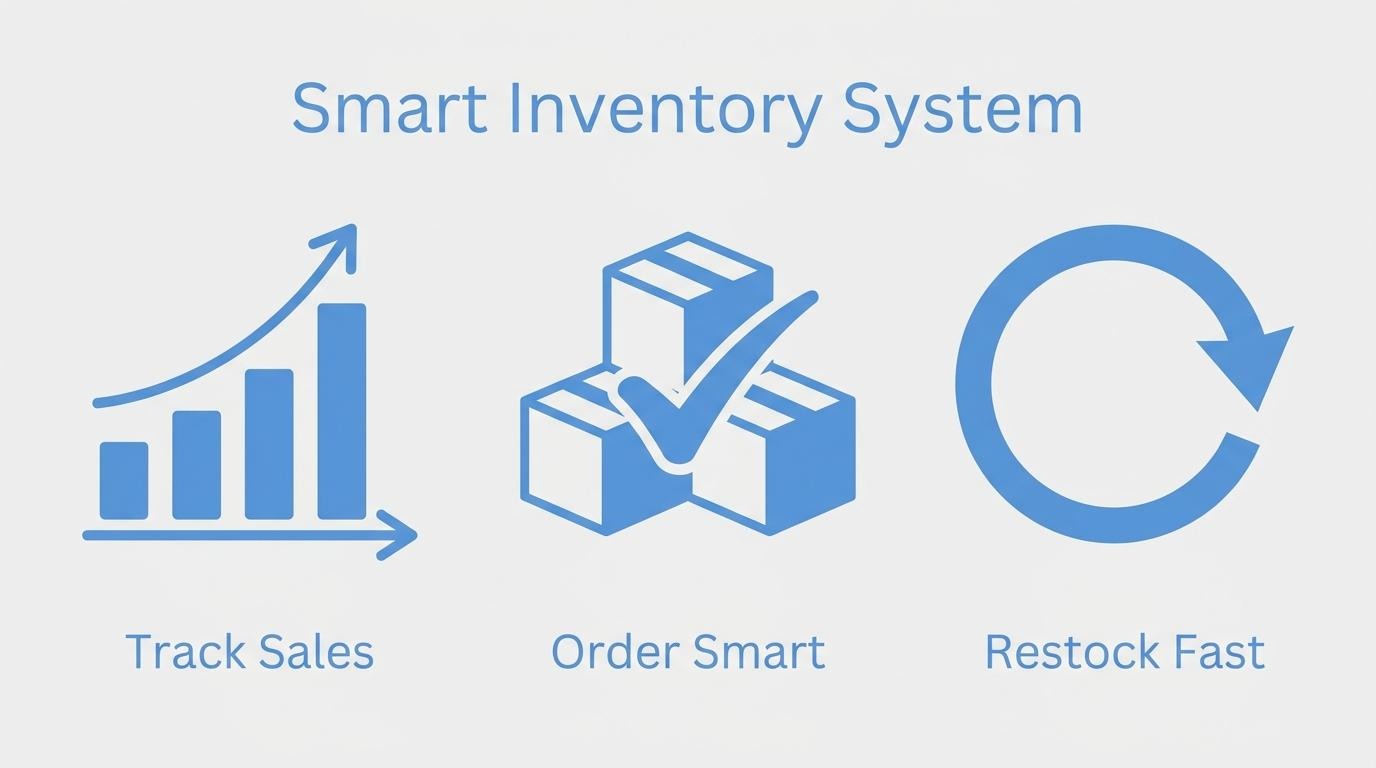
For resellers selling across multiple channels, the operational complexity of inventory management grows quickly. Platforms that unify storefront, marketplace, and point-of-sale inventory into a single view eliminate the manual reconciliation that causes both overselling and overstocking. Avoiding common inventory mistakes sets the stage for scaling without cash flow bottlenecks.
The mistakes new wholesale resellers make most often include ignoring landed costs, over-ordering untested products, skipping supplier vetting, and neglecting sales-tax compliance. Each error compounds quickly, eroding margins before a business gains traction.
New resellers frequently underestimate how shipping, tariffs, and platform fees collapse the gap between wholesale cost and retail price. According to the International Trade Administration (U.S. Department of Commerce), landed cost is the total price of a product once it arrives at the buyer's door, including the original product price, insurance, freight, tariffs, taxes, and other fees. Treating the supplier invoice as the full cost is one of the fastest ways to misprice inventory and sell at a loss.
Other common mistakes include:
Most of these errors stem from the same root problem: treating resale as simple arbitrage rather than an operation with layered costs and compliance requirements. Resellers who build a full cost model, validate products in small batches, and set up proper tax documentation from day one avoid the margin erosion that forces many beginners out within the first year.
With these pitfalls mapped, the next step is building systems that scale beyond manual tracking and spreadsheets.
You scale a wholesale resale business past manual operations by consolidating storefront, customer data, and point-of-sale into a single platform. The sections below cover how unified systems replace fragmented tool stacks and summarize the key takeaways from this guide.
SHOPLINE consolidates storefront, CRM, and POS by running commerce, customer data, and in-store sales inside one system with a shared data layer. Instead of syncing a separate email platform, subscription app, and point-of-sale terminal through third-party connectors, SHOPLINE keeps every transaction and customer interaction tied to a single record. This eliminates the reconciliation work that slows resellers managing inventory across online listings and physical pop-ups. For wholesale resellers selling across multiple channels, a unified system reduces the manual exports, duplicate entries, and data mismatches that compound as order volume grows. SHOPLINE is one option for brands ready to consolidate rather than add more tools.
The key takeaways about cheap wholesale products for resale center on margin discipline, supplier verification, legal compliance, and operational efficiency:
Resellers who treat compliance and data infrastructure as foundations, not afterthoughts, position themselves to scale without the operational bottlenecks that stall growth.