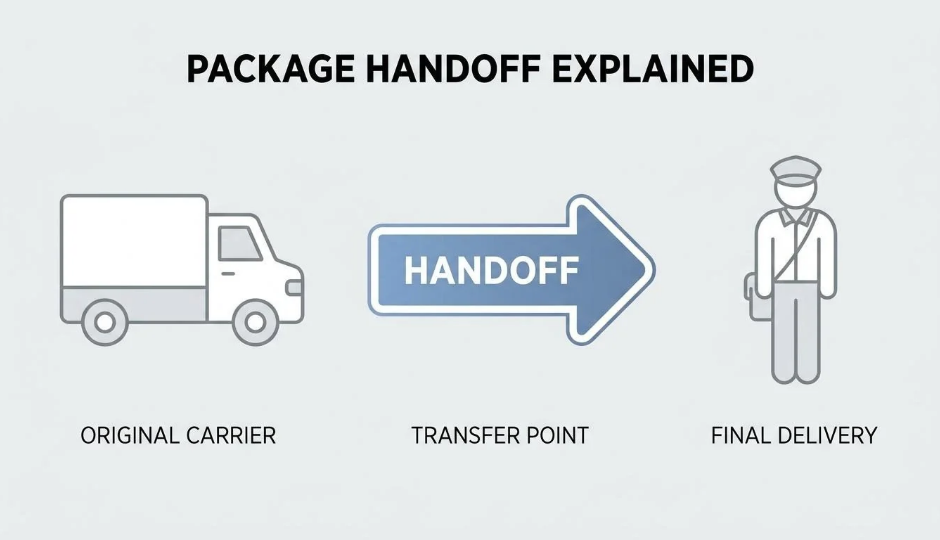
"Tendered to delivery service provider" is a shipping status confirming that one carrier has handed off a package to a separate provider for last-mile delivery. The scan appears most often with hybrid services like FedEx SmartPost and DHL eCommerce, where the originating carrier handles long-haul transport and a local provider (typically USPS) covers the final leg to the recipient's door.
This guide covers the mechanics of the carrier handoff, delivery timelines across service types, troubleshooting stalled tracking, the customer experience impact for ecommerce sellers, and strategies for reducing delivery confusion.
The handoff itself is a routine logistics event, not an error. It sits near the end of the shipping journey, after linehaul sorting and just before local sortation and doorstep delivery. Once the scan posts, tracking responsibility shifts entirely to the receiving carrier, which explains the brief visibility gap many recipients notice.
Delivery after the tendered scan typically takes two to seven business days, though timelines vary. Hybrid postal services like SmartPost average two to five days once USPS accepts the parcel, while standard last-mile carriers often deliver within one to three days. Peak holiday seasons can stretch that window to ten days or more.
When tracking stalls, the right response depends on duration. A 24-to-48-hour gap is normal during the system transition. Gaps beyond five days call for a package trace with the last-mile carrier, and packages marked delivered but not received require a formal claim filed within 60 days.
For online sellers, this status is a leading trigger of "where is my order" inquiries. Setting realistic delivery estimates at checkout and sending proactive notifications at each milestone, including the handoff itself, reduces support volume and protects repeat purchase intent.
The "tendered to delivery service provider" status is a shipping update indicating that a package has been handed off to a carrier for last-mile delivery. According to EasyPost, this scan confirms the original shipping carrier has transferred custody of the parcel to a separate provider, typically a postal service or regional courier, responsible for completing the final leg to the recipient's address. The handoff itself is a routine logistics event, not an error or delay. It appears most often with economy and hybrid shipping services where one carrier handles long-haul transport and another covers the doorstep delivery. Once this status posts, tracking responsibility shifts to the receiving carrier, which can temporarily reduce visibility for both the sender and the customer.
The delivery service provider is the carrier that receives your package for final-mile transport to your address. This provider varies by shipment and can be USPS, a regional carrier, or an independent last-mile courier.
When USPS is the delivery service provider, it means the United States Postal Service has accepted your package from another carrier and will complete the final delivery to your mailbox or door. This handoff is common with services like FedEx SmartPost and DHL eCommerce, where the originating carrier transports the parcel most of the journey before passing it to USPS for the last leg.
USPS operates the largest delivery network in the country. According to USPS data, the Postal Service delivered to 157.8 million residential addresses and 12.6 million business addresses in 2025. Because of this unmatched reach, especially in rural areas, many carriers rely on USPS to cover addresses their own fleets cannot serve cost-effectively. If an issue arises after USPS takes possession, damage or missing-contents claims must be filed within 60 days of the mailing date.
When a regional carrier is involved, it means a smaller, geographically focused delivery company has received your package for final delivery instead of a national carrier. Regional carriers such as OnTrac, Spee-Dee, and LSO operate within specific states or multi-state zones, often providing faster transit times within their coverage areas.
These carriers are typically contracted by larger shippers or ecommerce fulfillment networks to handle volume in high-density regions at lower cost. Tracking updates may appear under an unfamiliar carrier name, which can confuse recipients who expected USPS or another national provider. Checking the tracking number directly on the regional carrier's website usually restores visibility into your package's location and estimated arrival.
When a last-mile courier handles delivery, it means an independent or gig-economy delivery service completes the final transport from a local hub to your address. Companies like Amazon Flex drivers, local courier services, and crowdsourced delivery platforms fall into this category.
Last-mile delivery represents a significant portion of overall shipping expense. According to Statista, last-mile delivery costs accounted for 53% of total shipping costs in 2023. This cost pressure drives carriers to outsource final delivery to flexible courier networks, particularly in dense urban areas where smaller vehicles navigate more efficiently. Tracking from these couriers can be limited or delayed compared to national carriers, so packages sometimes appear to stall before arriving without further scan updates.
Understanding which provider type handles your package helps set realistic delivery and tracking expectations.
The "tendered to delivery service provider" status falls near the end of the shipping journey, after linehaul transport and before final doorstep delivery. It marks the handoff point where the originating carrier transfers your package to a last-mile provider. Understanding where this scan sits in the full sequence clarifies why tracking may temporarily pause and when to expect your delivery.
A typical shipping journey follows this sequence:
The "tendered" scan sits at step four, which is the pivot point between two separate carrier networks. Before this scan, the originating carrier controls tracking updates. After it, the last-mile provider's system takes over. This transition between systems is precisely why many recipients notice a brief gap in tracking data during this stage.
For most shipments using services like FedEx SmartPost or DHL eCommerce, this handoff happens after the package has already traveled the longest distance. The remaining leg is typically the shortest in miles but, according to a 2023 Statista analysis, last-mile delivery costs accounted for 53% of total shipping costs. That cost concentration reflects the operational complexity of final delivery to individual addresses.
Knowing this status sits just one or two steps before delivery helps set realistic expectations: the package is close, even if tracking appears stalled during the carrier-to-carrier transfer.
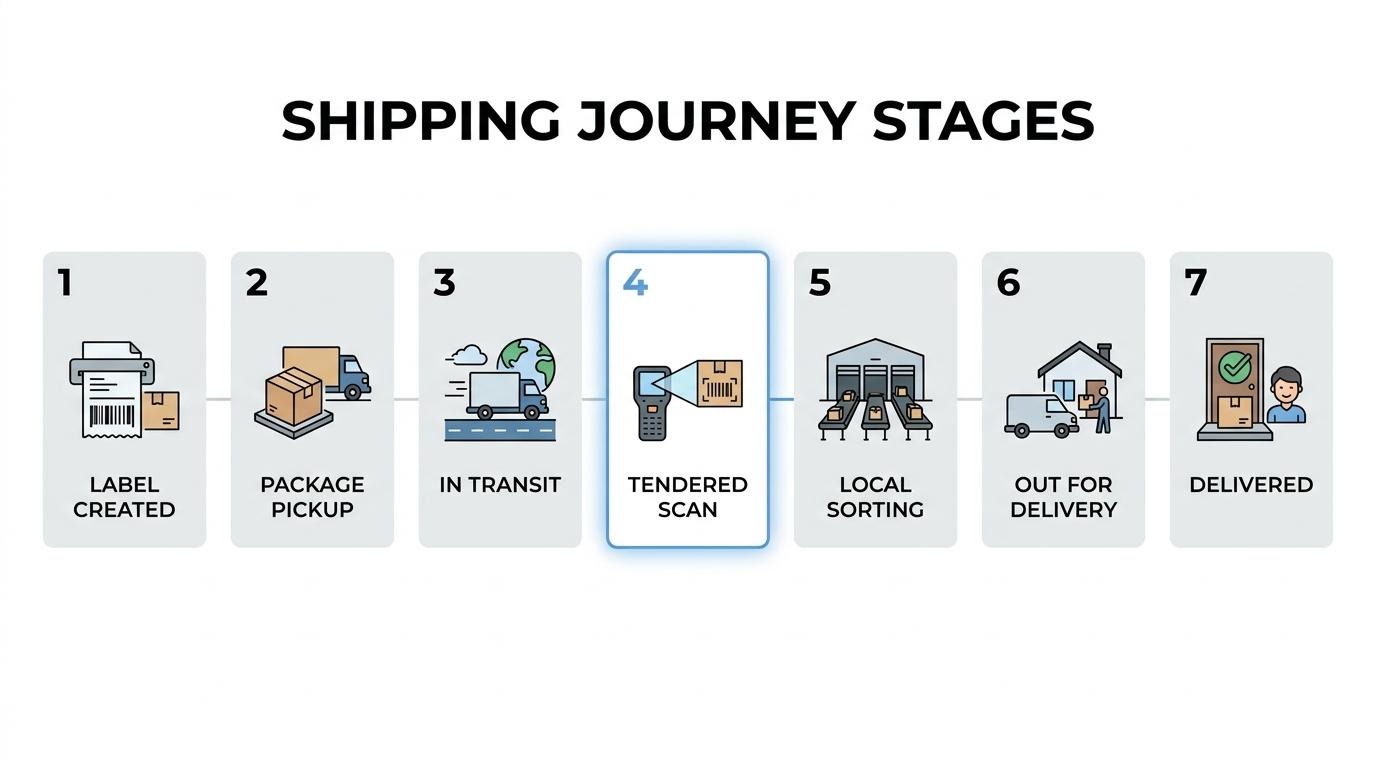
After a package is tendered, it enters the last-mile delivery provider's network for sorting, routing, and final delivery to the recipient's address. The steps below cover intake processing, local transit, and doorstep delivery.
The last-mile carrier receives the package at a local facility, scans it into its own system, loads it onto a delivery vehicle, and brings it to the destination. Each stage involves a distinct operational step.
Because the tendering process transfers custody between two separate logistics systems, a brief tracking gap often occurs between the original carrier's last scan and the receiving carrier's first scan. This is normal. According to a 2025 report by Locus, retailers lose $95 billion annually from logistics visibility gaps caused by broken handoffs between warehouses, carriers, and last-mile fleets. For recipients, the gap usually resolves within 24 to 48 hours once the last-mile provider's intake scan populates.
Knowing what each post-tender step looks like helps set realistic expectations for when the next tracking update will appear.
Delivery after a package is tendered typically takes two to seven business days, depending on the carrier, service tier, and season. The subsections below break down timelines for hybrid postal services, standard last-mile carriers, and peak holiday periods.
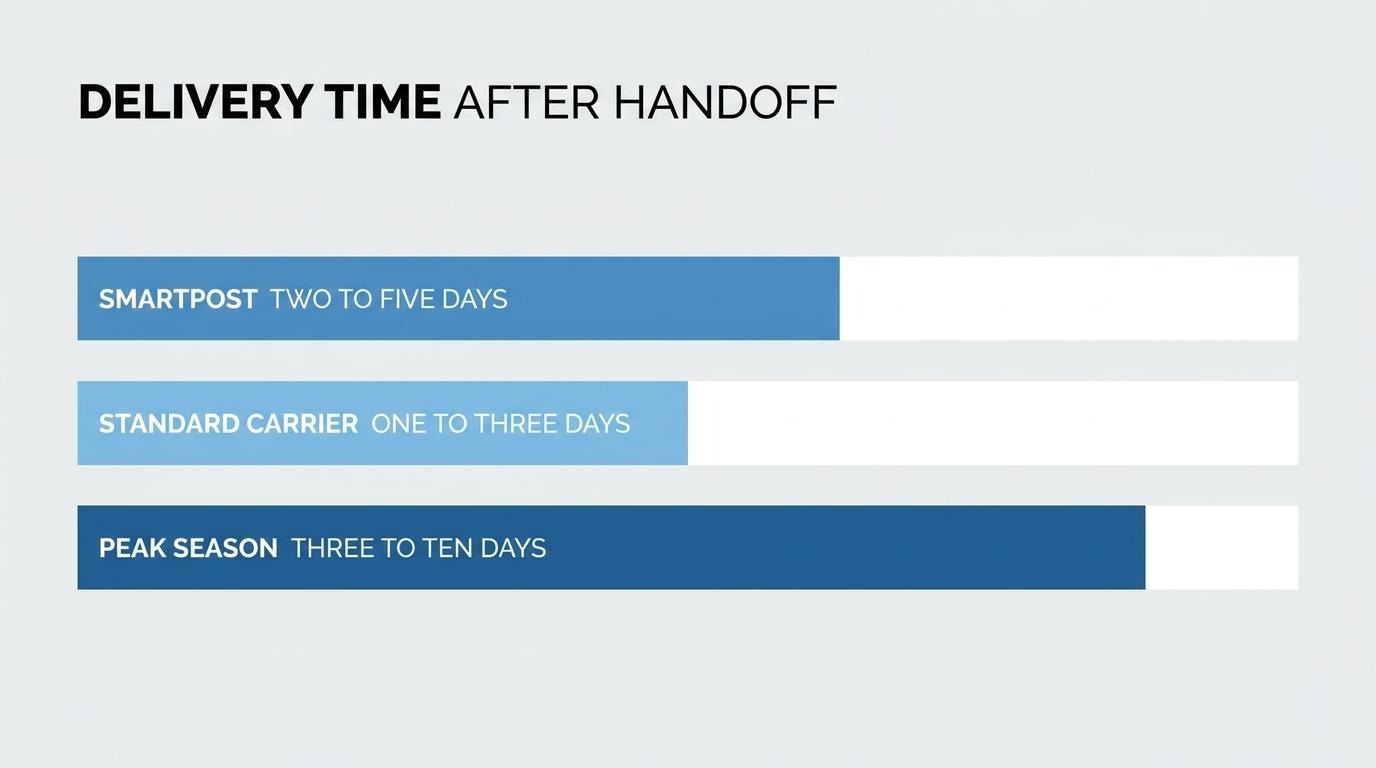
It takes two to five business days with FedEx SmartPost once USPS accepts the package for final delivery. These hybrid services route parcels through a primary carrier's network before USPS completes the last mile. One notable change: as of January 2025, UPS now completes all SurePost deliveries in-house, so SurePost shipments no longer trigger a "tendered to delivery service provider" scan at all. DHL eCommerce follows a similar hybrid model. According to the United States Postal Service, DHL eCommerce handles nationwide pickup and sortation across its 19 fully automated hubs, then partners with USPS to complete every final-mile delivery. Because an extra handoff is involved, these services trade speed for lower shipping costs.
It takes one to three business days with a standard last-mile carrier after the tendered scan appears. Regional carriers and local courier fleets generally operate shorter delivery zones, which compresses transit time compared to hybrid postal services. However, the handoff itself can introduce a tracking gap. According to a Locus report, retailers lose $95 billion annually from logistics visibility gaps caused by broken handoffs between warehouses, carriers, and last-mile fleets. When tracking goes dark for a few hours during the carrier-to-carrier transfer, the package is usually still in transit; the receiving carrier simply has not yet scanned it into its own system. For most domestic shipments, the gap resolves within 12 to 24 hours.
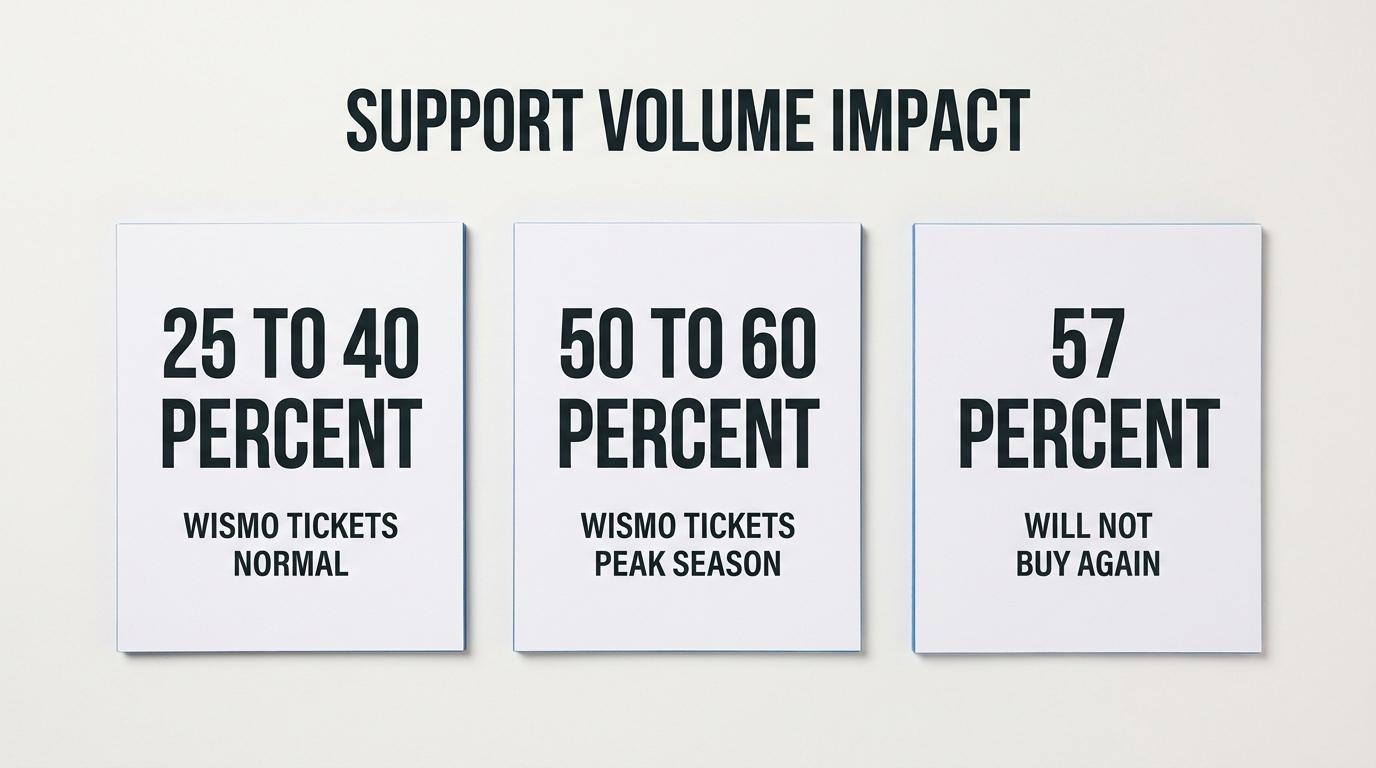
It takes three to ten business days during peak holiday seasons, sometimes longer. Carrier networks operate near or at capacity from late November through early January, which stretches every stage of the delivery pipeline, including the last-mile leg after tendering. Sorting facilities process higher volumes, delivery routes grow denser, and weather disruptions compound delays. According to Decagon, WISMO inquiries account for 25 to 40 percent of total inbound support volume for e-commerce companies, rising to 50 to 60 percent during peak periods like holiday shopping seasons. Setting realistic delivery estimates at checkout is one of the most effective ways to reduce that surge in support tickets.
Understanding these timeframes helps sellers and buyers set the right expectations, but delays sometimes go beyond normal windows, raising the question of what to do when tracking stalls entirely.
Carriers tender packages to another provider primarily to reduce last-mile delivery costs and extend geographic reach. This decision is driven by operational efficiency, infrastructure limitations, and contractual partnerships.
The main reasons carriers hand off packages to a secondary delivery service provider include:
For ecommerce merchants, these handoffs are routine rather than exceptional. The "tendered to delivery service provider" scan simply reflects this operational reality. Understanding why it happens helps sellers set accurate delivery expectations and anticipate the tracking visibility gaps that often accompany carrier-to-carrier transfers.
The carriers that most commonly use the "tendered to delivery service provider" scan are FedEx SmartPost, UPS SurePost, and DHL eCommerce. Each service relies on a handoff model where the originating carrier moves packages through its network before passing them to a last-mile provider.
FedEx SmartPost is a hybrid shipping service that uses FedEx for long-haul transportation and USPS for final delivery. When a SmartPost package reaches a local postal facility, FedEx generates the "tendered to delivery service provider" scan. From that point, USPS assumes responsibility for the last mile to the recipient's address. This model reduces shipping costs on lightweight, less time-sensitive parcels. Tracking visibility can pause briefly during the handoff, since the package transitions between two separate carrier systems before a new USPS scan appears.
UPS SurePost historically operated as a hybrid service that tendered lightweight packages to USPS for last-mile delivery. However, as of January 2025, all SurePost deliveries are completed in-house by UPS, according to EasyPost. This means SurePost shipments no longer produce a "tendered to delivery service provider" status update. Packages stay within the UPS network from pickup through final delivery, eliminating the carrier handoff that previously caused tracking gaps. For merchants still seeing this scan on older SurePost labels, the status reflects legacy routing before UPS brought the service fully in-house.
DHL eCommerce is a shipping service built around a carrier handoff model. DHL handles nationwide pickup and sortation across its 19 fully automated hubs, then tenders packages to USPS for final-mile delivery. The "tendered to delivery service provider" scan appears when DHL transfers a parcel into the USPS network. Because every DHL eCommerce shipment in the U.S. follows this two-carrier structure, this status is standard rather than occasional. Tracking transitions from DHL's system to USPS tracking once the handoff completes, so a brief visibility gap between scans is expected.
Understanding which carrier generated the scan helps pinpoint where to direct tracking inquiries if updates stall.
If tracking stops after the "tendered to delivery service provider" status, your next step depends on how long the gap has lasted. Below, each scenario covers what to do at 24–48 hours, beyond five days, and when a package shows delivered but was not received.
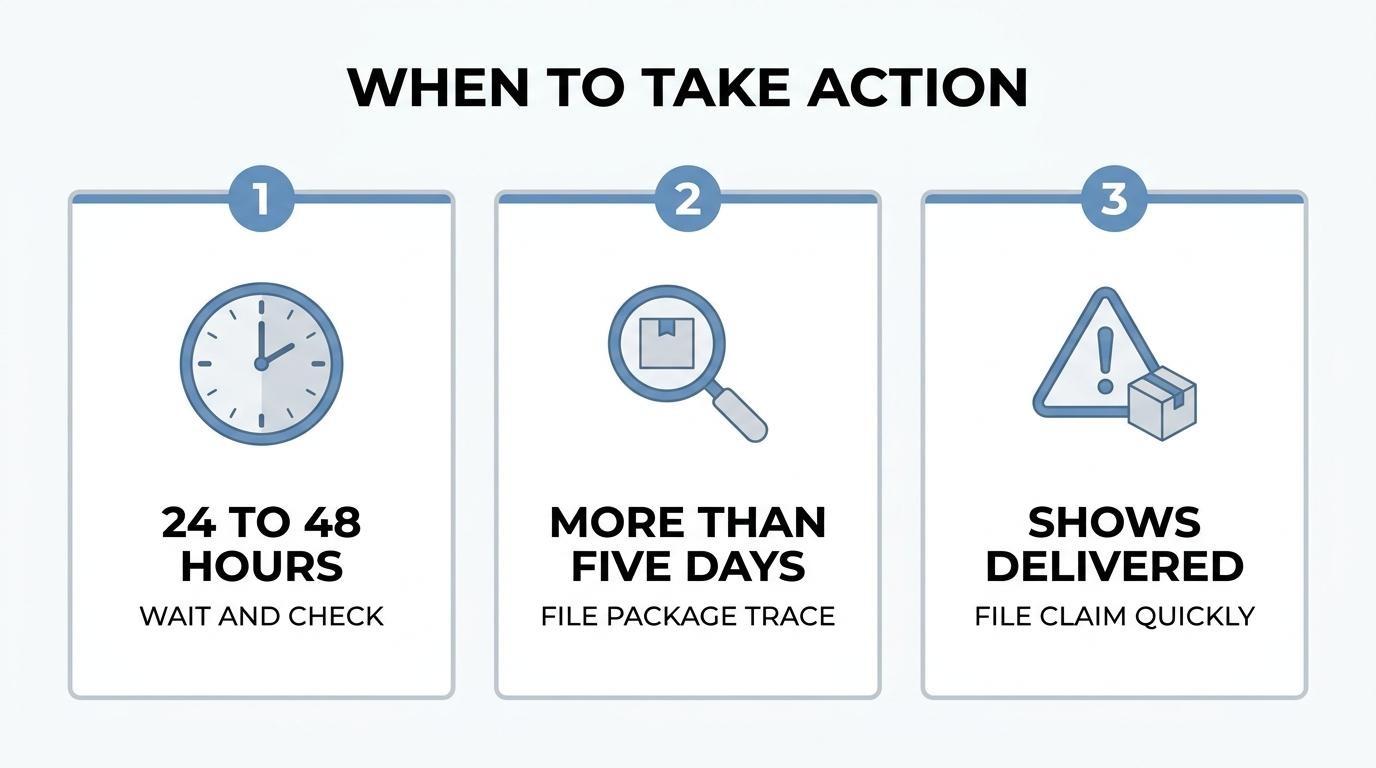
If there is no update for 24 to 48 hours, the delay is almost always normal. The receiving carrier, typically USPS, may not scan the package immediately upon intake. Tracking systems often lag during the handoff between the originating carrier and the last-mile provider.
During this window, take these steps:
According to Salesforce, WISMO (Where Is My Order) inquiries consume significant support resources, with employees spending over seven hours per 40-hour workweek on low-value tasks like fielding these questions. Waiting the full 48 hours before escalating avoids adding to that volume unnecessarily.
If there is no update for more than five days, the package may be lost or stuck in a processing backlog. At this point, passive waiting is no longer advisable.
Take these actions in order:
For sellers, proactive notifications at this stage reduce inbound support load and protect customer trust. A five-day gap without communication signals a broken experience to the buyer.
If the package shows delivered but was not received, the discrepancy typically stems from a premature scan, misdelivery, or porch theft. This situation requires immediate action.
Start with these checks:
If the package remains missing, file a formal claim. According to UPS, recipients should start a claim within 60 days of the scheduled delivery for packages that have been lost or damaged. USPS maintains a similar 60-day claim window from the mailing date. Acting quickly preserves your eligibility for reimbursement or a replacement shipment.
Understanding these claim timelines helps sellers set clear post-purchase expectations, which directly reduces repeat inquiries and dispute escalations.
This status affects ecommerce customer experience by creating a tracking visibility gap that triggers customer anxiety, increases support volume, and can erode repeat purchase intent. The following subsections cover WISMO inquiry spikes, delivery expectation gaps, and long-term retention risks.
The "tendered to delivery service provider" scan marks the exact moment tracking data often goes dark for the customer. When a primary carrier hands a package to a last-mile provider, the original tracking number may stop updating entirely, or updates arrive with significant delays. This gap between what the merchant promised and what the customer sees fuels uncertainty.
According to a Decagon analysis, WISMO inquiries account for 25–40% of total inbound support volume for ecommerce companies, rising to 50–60% during peak periods such as holiday shopping seasons. Carrier handoff statuses are a primary driver of these inquiries because customers see an unfamiliar scan event and assume something went wrong.
The downstream effects compound quickly. Sendcloud research found that nearly 60% of online consumers have encountered at least one delivery problem in the past three months, and 57.4% of customers globally say they will not buy again if a package fails to arrive. Even when the package eventually arrives on time, the perceived delivery failure during the tracking blackout can still damage brand trust.
For brands scaling past initial volume thresholds, this is not a minor inconvenience; it is an operational cost center. Support agents fielding repetitive "where is my order" questions lose hours that could go toward strategic work. Customers who cannot see a clear estimated delivery date hesitate to convert in the first place: 40% of online shoppers will not buy without a visible EDD, according to Digital Applied.
The most effective way to mitigate this experience gap is proactive communication. Merchants who surface carrier handoff context through order status pages and automated notifications can preempt confusion before it becomes a support ticket. Understanding what triggers these tracking gaps puts sellers in a stronger position to protect both conversion rates and long-term loyalty.
Online sellers reduce delivery confusion from handoffs by setting clear delivery expectations at checkout and sending proactive shipping notifications throughout the fulfillment process. These two strategies address the most common sources of customer anxiety during carrier transitions.
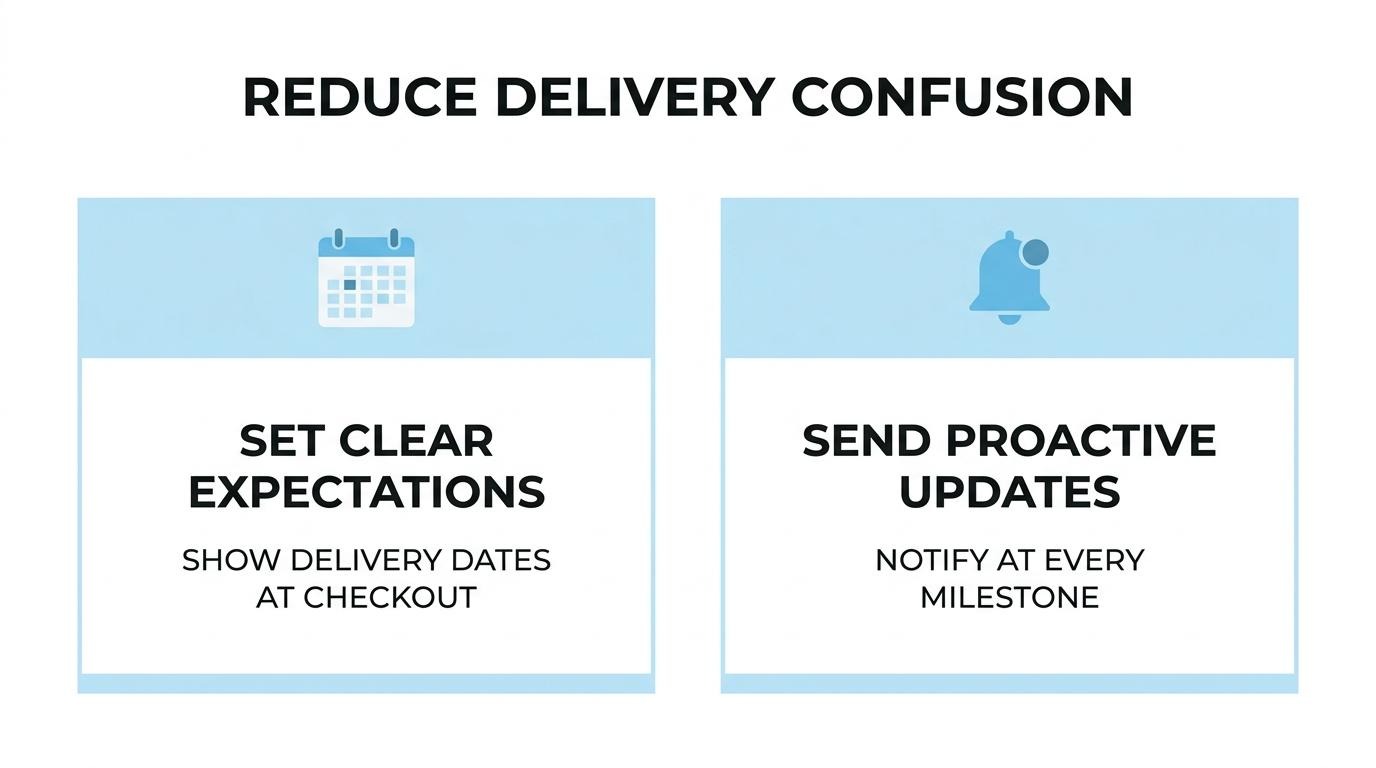
Setting delivery expectations at checkout helps because it gives buyers a concrete delivery window before they complete a purchase, reducing uncertainty about when their order will arrive. When customers know upfront that a multi-carrier shipment takes two to seven business days, the "tendered to delivery service provider" status becomes an expected milestone rather than an alarming unknown.
Estimated delivery dates (EDDs) directly influence purchasing decisions. According to a 2026 Digital Applied report, 40% of online shoppers will not buy without a visible EDD on the checkout page. Displaying realistic timeframes that account for carrier handoffs prevents the gap between expectation and reality that drives post-purchase frustration. For sellers using services like FedEx SmartPost or DHL eCommerce, where USPS completes last-mile delivery, the checkout page should reflect the full end-to-end transit window rather than just the initial carrier's estimate.
Proactive shipping notifications reduce support tickets by answering the "where is my order" question before customers need to ask it. WISMO (Where Is My Order) inquiries account for 25–40% of total inbound support volume for ecommerce companies, according to Decagon, rising to 50–60% during peak holiday seasons.
Automated notifications at key milestones reduce this volume significantly:
Each notification should explain what the status means in plain language. When a package is tendered, telling the customer "your order has been transferred to USPS for final delivery" is far more useful than displaying raw carrier scan data. This is one of the most overlooked retention levers in ecommerce; brands that communicate clearly during handoffs build trust that outlasts any single delivery hiccup.
With delivery communication strategies in place, the underlying data architecture determines how seamlessly sellers can execute them.
Multi-tool shipping setups create data gaps during handoffs by fragmenting order, tracking, and delivery information across disconnected systems. Each tool holds a partial view, and carrier transitions expose the seams.
SHOPLINE unifies order and delivery data without extra apps by keeping commerce, fulfillment tracking, and customer records inside a single platform with a shared data layer. When a package reaches the "tendered to delivery service provider" stage, the order status, carrier information, and estimated delivery date remain tied to one customer record rather than scattered across separate shipping tools, email platforms, and support dashboards.
This consolidation matters because visibility gaps at handoff points directly affect purchasing decisions. According to a 2026 report by Digital Applied, 40% of online shoppers will not buy without a visible estimated delivery date. Surfacing that information natively, without syncing data between third-party apps, reduces the lag that often leaves customers staring at stale tracking pages during carrier transitions.
The key takeaways about "tendered to delivery service provider" are:
Understanding this status gives both shoppers and sellers a clearer picture of where a package sits in the shipping journey, and what action to take if delivery stalls.