Social shopping is the practice of buying products directly through social media platforms, where discovery, peer influence, and checkout happen in a single environment instead of across separate websites and apps.
This guide covers how social shopping works and where it fits in the broader commerce landscape, the specific benefits it delivers to DTC brands, which platforms and features drive the strongest results, best practices for scaling social storefronts, and how unified data turns social engagement into measurable revenue.
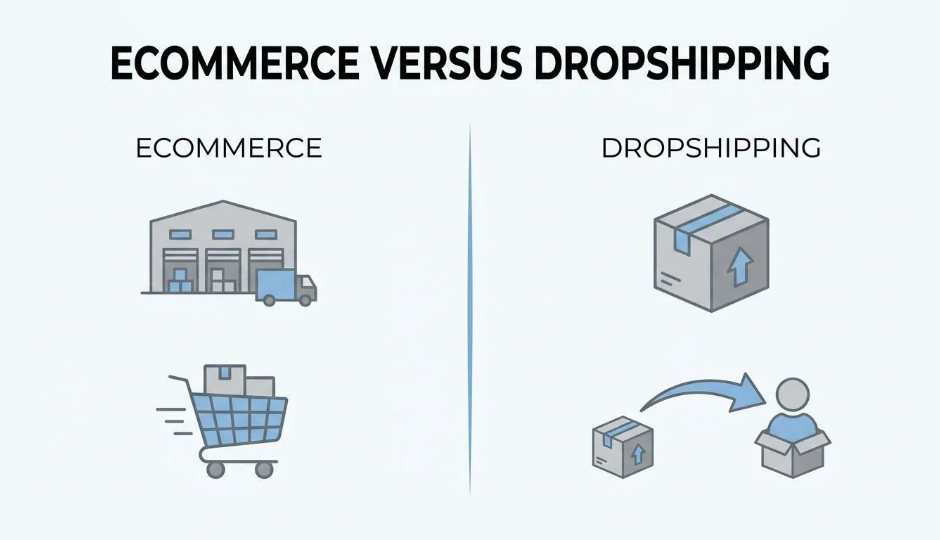
Social shopping differs from both traditional ecommerce and the broader category of social commerce in important ways. Traditional ecommerce relies on search-driven intent; social shopping reverses that model by surfacing products through feeds, creator content, and peer recommendations before a buyer actively searches. Social commerce encompasses the full transactional infrastructure, while social shopping focuses specifically on how community behavior shapes purchase decisions.
For DTC brands, the benefits are concrete. Social shopping expands product discovery into passive browsing moments, compresses the path to purchase by eliminating redirect-heavy flows, and builds trust through visible social proof. It also offsets rising acquisition costs by turning customers and creators into organic distribution channels, while repeated social touchpoints drive higher lifetime value.
Platform selection and feature execution determine whether those benefits materialize at scale. Instagram, TikTok Shop, Facebook Shops, Pinterest, and YouTube Shopping each reward different content formats and demographics. Shoppable posts, live shopping events, user-generated content tags, and in-app checkout each target distinct stages of the buyer journey.
Scaling requires disciplined execution: curated storefronts, compliant influencer partnerships, consistent content refreshes, and in-channel customer service. Performance measurement depends on connecting social conversion data to a unified CRM rather than relying on siloed platform metrics. When social shopping data consolidates into one system, brands gain the complete customer context that separates reactive campaigns from proactive lifecycle marketing.
Social shopping means buying products through social media platforms where discovery, peer influence, and purchase happen in the same environment. It blends browsing, community interaction, and transactions into a single experience rather than separating them across different websites and apps.
Traditional online shopping begins with a search engine query or a direct visit to a retailer's website. Social shopping reverses that sequence. A consumer scrolling through Instagram, TikTok, or Facebook encounters a product organically, through a friend's post, a creator's recommendation, or a tagged shoppable image, and can purchase without leaving the platform. The entire journey, from awareness to checkout, stays within one social feed.
What makes social shopping distinct is the role of community. Ratings, comments, shares, and user-generated content replace the static product page as the primary trust signal. Shoppers rely on real people, not brand copy, to evaluate whether a product is worth buying. This peer-driven validation is baked into every interaction, turning passive scrolling into active purchasing behavior.
For scaling DTC brands operating in the United States, social shopping represents a shift in where revenue originates. It is no longer a supplemental channel; it is becoming a primary storefront where product launches, customer engagement, and repeat purchases converge in a single touchpoint.
Social shopping differs from social commerce in scope. Social shopping centers on the community-driven, interactive side of buying online, while social commerce encompasses the entire selling infrastructure across social platforms. Below is a breakdown of how these terms relate and where they diverge.
Social shopping is a subset of social commerce. According to ScienceDirect, social shopping is a subset of electronic commerce that uses social media and user contributions to enhance the online purchase experience. It emphasizes peer interaction: reading reviews, sharing wishlists, asking friends for opinions, and browsing user-generated content before buying. The focus is on how social behavior shapes a purchase decision, not on the transaction itself.
Social commerce is the broader category. It includes everything social shopping covers, plus the transactional layer: in-app checkout, shoppable posts, native storefronts, and platform-level selling tools. When a brand sets up an Instagram Shop, enables one-tap purchasing inside TikTok, or runs a live shopping event with a built-in cart, that is social commerce infrastructure at work. Social commerce features like interactivity, recommendations, and feedback generate perceived value that drives repurchase intentions.
The distinction matters for strategy. Social shopping informs how brands build community, encourage peer influence, and create shareable content. Social commerce dictates where and how transactions close. Both operate on the same platforms, but they answer different questions: social shopping asks "how do people discover and validate products together?" while social commerce asks "how do we sell directly inside these channels?"
The market reflects both forces converging. The global social commerce market stands at $2.6 trillion in 2026, with the B2C segment projected to reach $5.2 trillion by 2030 at a CAGR of 27.1%. Platform adoption in the United States is equally telling; Facebook had approximately 68 million social commerce buyers in 2024, while 37.2% of US adults identified Instagram as their most likely social shopping destination. For brands scaling past their first million in revenue, understanding which layer needs investment (community engagement versus transactional infrastructure) is often the difference between a social presence that generates awareness and one that consistently closes sales.
Social shopping differs from traditional ecommerce by embedding the entire buying experience within social platforms, where community interaction drives discovery and purchase decisions. The key differences span discovery, trust signals, and checkout flow.
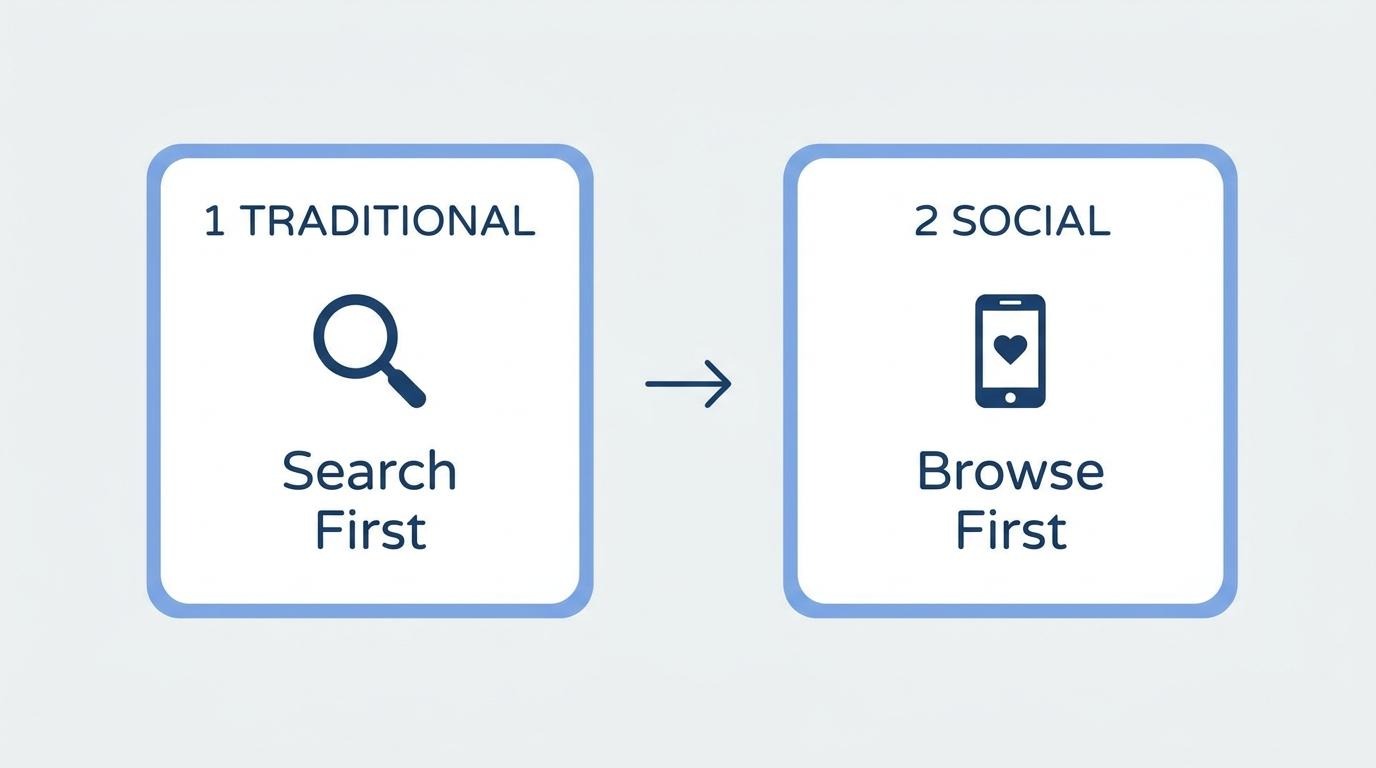
Traditional ecommerce relies on search-driven intent. Shoppers type keywords into Google or navigate directly to a retailer's website, meaning they already know what they want. Social shopping reverses this dynamic; products surface organically through feeds, creator content, and peer recommendations before a buyer actively searches. This shift from pull-based to push-based discovery is significant because it captures demand at the awareness stage rather than at the decision stage. For brands selling visually compelling products, that earlier touchpoint often determines which brand enters the consideration set first.
Traditional ecommerce builds trust through star ratings, written reviews, and return policies displayed on product pages. Social shopping layers real-time social proof on top of those signals. Buyers see friends, creators, and community members interacting with products through comments, shares, and live demonstrations. According to a 2022 study published in the National Center for Biotechnology Information, social commerce features such as interactivity, recommendations, and feedback are positively related to perceived value, which in turn drives repurchase intentions. That feedback loop, visible and immediate, creates a trust mechanism traditional product pages cannot replicate.
Traditional ecommerce funnels shoppers through multiple steps: ad click, landing page, product page, cart, checkout. Each step introduces friction and potential drop-off. Social shopping compresses this journey by keeping browsing, evaluation, and payment inside a single platform. Shoppable posts, in-app storefronts, and native checkout eliminate the redirect that historically caused abandonment between social platforms and external websites. For scaling DTC brands managing high traffic volumes, fewer steps between discovery and conversion translate directly into higher completion rates and cleaner attribution data.
Social shopping has grown so quickly in the United States because of converging shifts in consumer behavior, platform investment, and mobile-first content consumption. Smartphone adoption, native checkout features, and algorithm-driven discovery have collapsed the gap between browsing and buying. The sections below break down the specific forces behind this acceleration.
Several factors drive this rapid growth:
For brands operating at volume, this convergence means customer acquisition increasingly starts inside social platforms rather than on search engines or branded storefronts. Understanding which platforms deliver the strongest returns is the next step in building an effective strategy.
The key benefits of social shopping for DTC brands include expanded product discovery, a shorter path to purchase, stronger social proof, lower acquisition costs, and higher customer lifetime value.
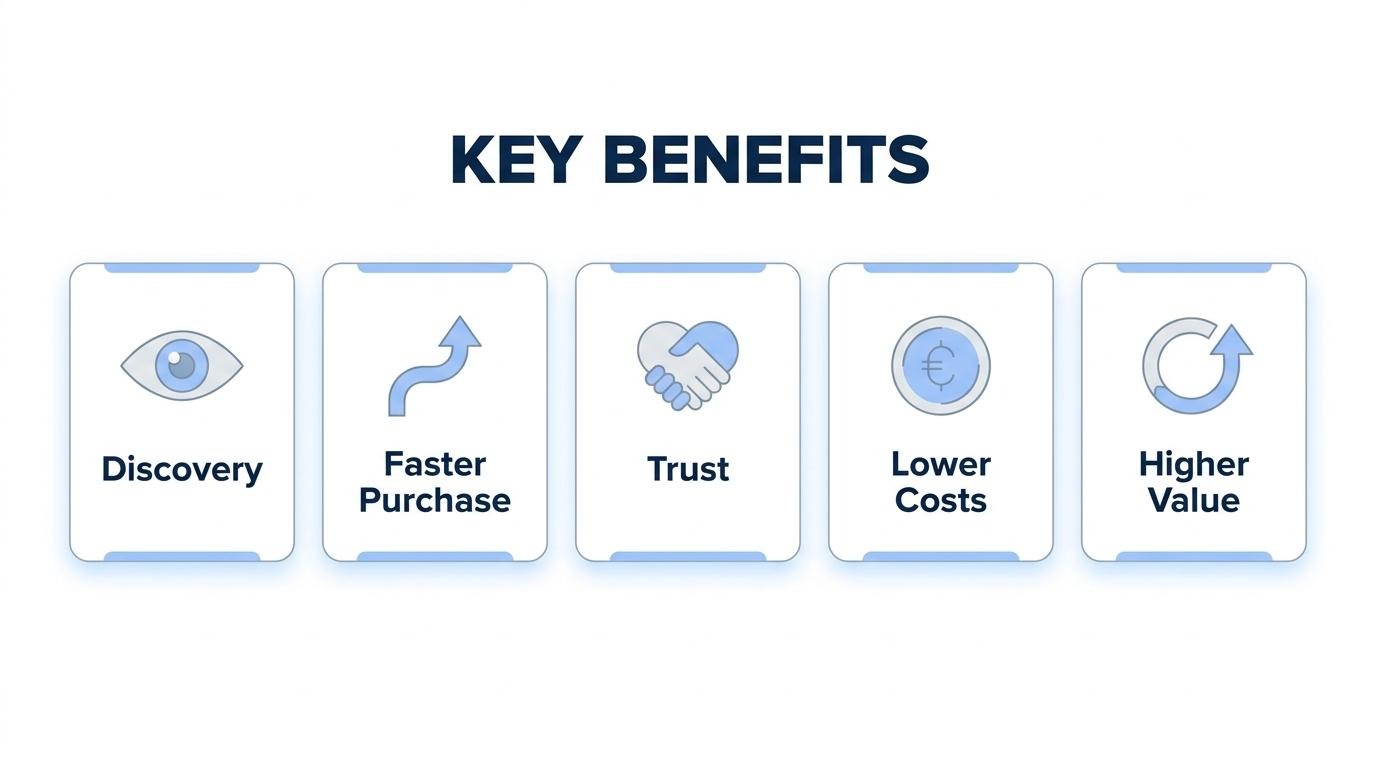
Social shopping increases product discovery by placing products directly inside the feeds, stories, and search results where consumers already spend time. Unlike traditional ecommerce, which relies on a buyer actively searching for a product, social platforms surface items through algorithmic recommendations, hashtag exploration, and creator content. This passive discovery model reaches shoppers before purchase intent forms, giving DTC brands access to audiences that paid search and display ads often miss. For brands selling visually driven products like apparel or beauty, feed-native formats turn casual scrolling into first-touch exposure at scale.
Social shopping shortens the path to purchase by collapsing the traditional funnel stages of awareness, consideration, and conversion into a single in-app experience. A consumer can see a product in a creator's video, tap a tagged item, view pricing, and complete checkout without ever leaving the platform. This reduction in friction eliminates the drop-off points that plague redirect-heavy flows. For DTC brands, fewer steps between discovery and payment translate directly into higher completion rates and faster revenue capture per impression.
Social shopping improves customer trust through social proof by making real user reviews, creator endorsements, and community engagement visible at the point of purchase. When shoppers see peers and trusted creators validating a product, perceived risk drops significantly. According to PwC, 85% of Gen Z reports that social media impacts their purchasing decisions, underscoring how deeply peer influence shapes buying behavior on these platforms. For DTC brands, this built-in trust layer reduces the persuasion burden that traditional product pages carry alone. Every comment, share, and tagged post compounds credibility in a way static testimonials cannot replicate.
Social shopping reduces customer acquisition costs by leveraging organic reach, creator partnerships, and community-driven sharing to attract buyers without heavy paid media spend. This matters because CAC pressure is intensifying across ecommerce; according to Amra and Elma, customer acquisition costs have increased 222% over the past eight years, with brands losing an average of $29 on every new customer acquired. Social shopping offsets this by turning existing customers and creators into distribution channels. Shoppable tags, shares, and user-generated content generate referral traffic at a fraction of the cost of traditional paid acquisition, making each marketing dollar work harder.
Social shopping boosts customer lifetime value by keeping brands embedded in the daily social feeds their customers already engage with, creating repeated touchpoints that drive repurchase behavior. Unlike one-and-done transactional channels, social platforms enable ongoing interaction through content, comments, live events, and personalized product recommendations. This continuous engagement deepens brand affinity and shortens the gap between purchases. DTC brands that maintain an active social storefront can nurture post-purchase relationships without relying solely on email or retargeting, turning first-time buyers into repeat customers more efficiently.
With these benefits established, the next step is identifying which platforms deliver the strongest returns.
Brands should prioritize social shopping platforms based on audience demographics, product category, and content format. The top platforms to evaluate are Instagram Shopping, TikTok Shop, Facebook Shops, Pinterest Shopping, and YouTube Shopping.
Instagram Shopping is a native commerce feature that lets brands tag products in posts, Stories, and Reels for in-app browsing and checkout. With 3 billion monthly active users globally and 92% of its audience under 45, Instagram skews toward millennials and younger consumers actively engaging with visual content. According to EMARKETER, 37.2% of U.S. adults say they are most likely to shop via Instagram, making it the top social commerce platform by purchase intent. For brands selling visually driven products like apparel, beauty, or home goods, Instagram remains the strongest starting point.
TikTok Shop is an integrated marketplace within TikTok that enables product listings, live selling, and creator-affiliate partnerships. According to a 2025 report from Momentum Asia, TikTok Shop's U.S. GMV grew 68% year-over-year to reach US$15.1 billion, up from US$9 billion in 2024. Globally, TikTok Shop generated US$64.3 billion in GMV that same year. Short-form video and live commerce fuel rapid discovery, particularly among Gen Z shoppers. Brands with products that lend themselves to demonstration or storytelling often see outsized traction here.
Facebook Shops is Meta's storefront feature that allows brands to create customizable product catalogs across Facebook and Instagram. With approximately 68 million social commerce buyers in the U.S. in 2024, Facebook holds the largest social shopping user base by volume. The platform's strength lies in its broad demographic reach, spanning age groups that Instagram and TikTok do not fully capture. Brands targeting a wider age range or running retargeting campaigns through Meta's ad ecosystem benefit most from maintaining an active Facebook Shop.
Pinterest Shopping turns Pins into shoppable product listings, connecting visual discovery directly to purchase. Unlike algorithm-driven feeds, Pinterest functions as a search-and-save platform where users actively plan purchases in categories like home decor, fashion, weddings, and food. This high-intent browsing behavior makes Pinterest particularly effective for brands whose products align with aspirational, project-based shopping. Product Pins display real-time pricing and availability, reducing friction between inspiration and transaction.
YouTube Shopping enables product tagging within videos, Shorts, and live streams, turning long-form and short-form content into shoppable experiences. The platform's strength is depth of engagement; viewers spend more time with video content that explains, reviews, or demonstrates products in detail. Creator affiliate programs allow brands to leverage established audiences without producing all content in-house. For brands whose products benefit from extended explanation or comparison, YouTube Shopping bridges the gap between education and conversion.
The most effective social shopping features are shoppable posts, live shopping, user-generated content tags, and in-app checkout. Each feature targets a different stage of the buyer journey, from discovery through payment.
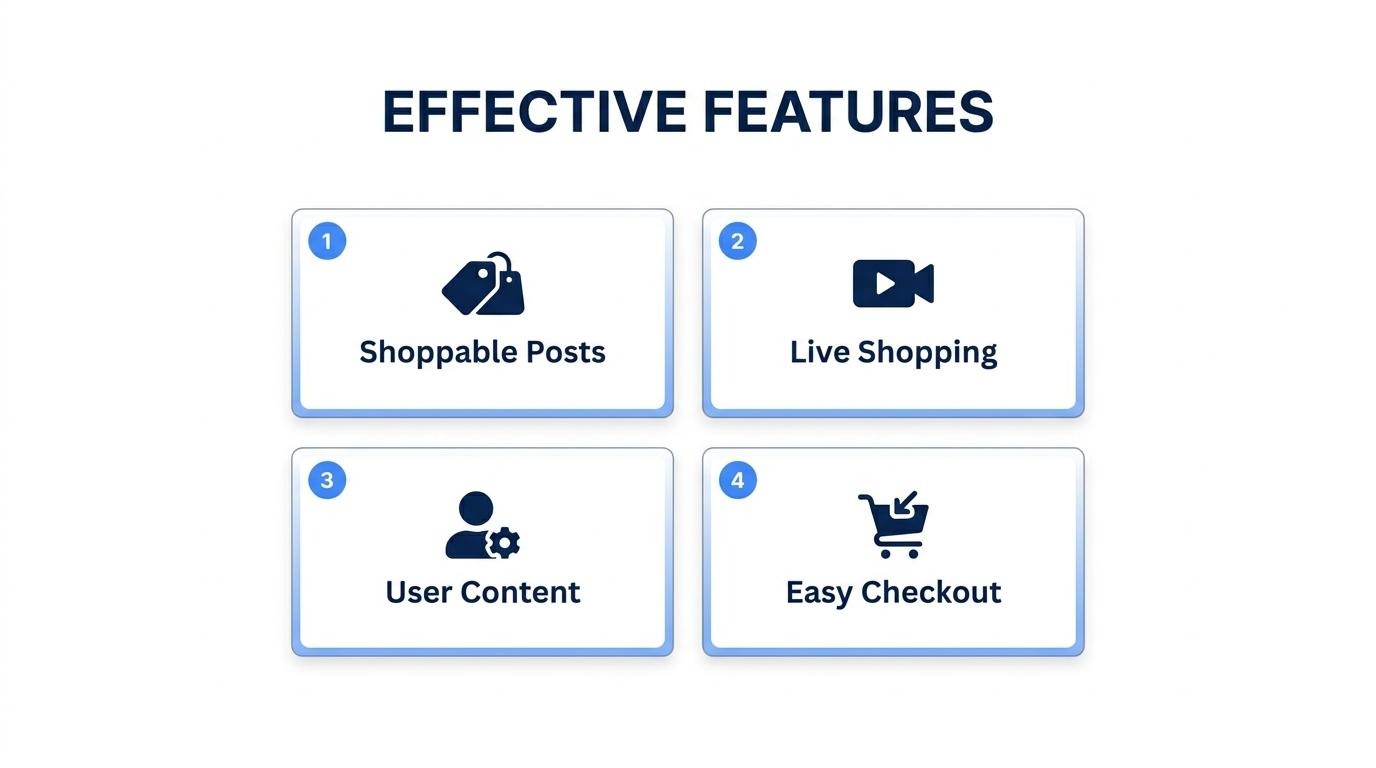
Shoppable posts drive conversions by embedding product tags directly into social content, letting users tap and buy without leaving the feed. This eliminates the friction of navigating to a separate product page, which is where most mobile shoppers drop off.
The format works because it collapses discovery and purchase into a single interaction. When a consumer sees a styled outfit or a product in context, the tagged item becomes instantly purchasable. For brands running social-first launches, that immediacy translates into measurably shorter paths to purchase. Shoppable posts are most effective when product tags are placed on lifestyle content rather than catalog-style images, since context-rich visuals give buyers the confidence to act in the moment.
Live shopping creates urgency and engagement by combining real-time product demonstrations with time-limited offers, turning passive scrolling into interactive buying events. Hosts answer questions, showcase products in use, and drop flash deals that expire when the stream ends.
According to Ringly.io, conversion rates for live shopping events can reach 30%, and the US livestream shopping market is forecast to hit $68 billion by 2026. That performance gap between live and static content comes down to two psychological triggers: scarcity (limited-time pricing) and social validation (watching others buy in real time). For scaling DTC brands, live shopping is one of the highest-ROI formats available when the host has genuine product knowledge and an engaged audience.
User-generated content tags influence buying decisions by attaching real customer experiences directly to purchasable products, which builds social proof at the point of discovery. When shoppers see tagged photos or videos from actual buyers, trust increases significantly compared to brand-produced content alone.
According to VentureMedia, influencer recommendations affect 75% of buyer decisions, and creator-led content is trusted 2× more than brand-only advertising. However, compliance matters here. FTC influencer disclosure requirements are legally binding in 2026, and brands can face fines of up to $53,088 per violation for failing to clearly reveal sponsored content. Any UGC strategy that involves affiliate links or paid partnerships must include visible disclosures to remain compliant.
In-app checkout experiences reduce cart abandonment by keeping the entire transaction inside the social platform, removing the redirect to an external site where most buyers abandon. Every additional step between intent and payment creates a drop-off point; in-app checkout eliminates several of them at once.
Stored payment credentials, autofilled shipping details, and single-tap purchasing all contribute to faster completion. Mobile shoppers, who account for the vast majority of social commerce traffic, benefit most from this frictionless flow. Platforms that consolidate storefront, checkout, and customer data into one system handle this natively, while fragmented setups often lose conversion data between the social platform and the external cart.
Social shopping best practices for scaling brands include curating platform-specific storefronts, structuring compliant influencer partnerships, integrating social data with CRM, refreshing content regularly, and responding to customers directly within social channels.
Brands should curate products for social storefronts by selecting a focused catalog tailored to each platform's audience, rather than mirroring an entire website. According to Ringly.io, brands using in-app storefronts see 20–25% higher conversion rates compared to external website links, and social-first product launches achieve up to 3× faster sales velocity.
Effective curation prioritizes bestsellers, new arrivals, and visually compelling items that perform well in scroll-driven feeds. Grouping products into themed collections, such as seasonal edits or gift guides, helps shoppers navigate without leaving the app. For brands selling across multiple social platforms, tailoring the assortment to each channel's demographics tends to outperform a one-size-fits-all approach.
Brands should use influencer partnerships in social shopping by selecting creators whose audience aligns with the brand's target buyer and structuring campaigns around authentic, shoppable content. According to Traverse Legal, brands and creators must disclose paid partnerships and avoid deceptive endorsements to comply with the FTC's updated 2026 guidelines.
Compliance aside, the strongest partnerships give creators genuine product experience before content goes live. This produces more credible recommendations than scripted ads. Scaling brands benefit most from long-term creator relationships rather than one-off sponsorships, because repeated exposure builds familiarity and trust with the creator's audience over time.
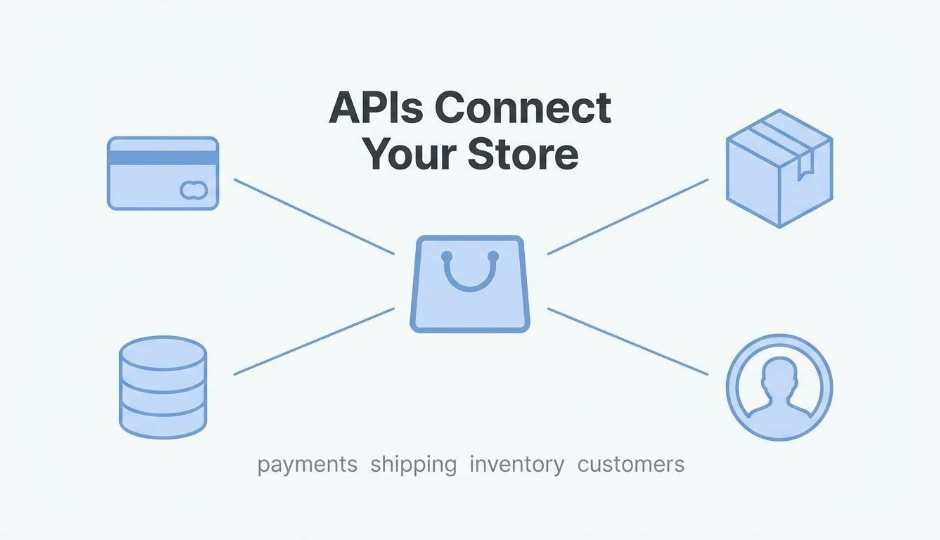
Brands should integrate social shopping data with CRM by connecting platform analytics, order data, and customer interactions into a single customer record. According to SHOPLINE Global, unified commerce platforms allow businesses to capture and analyze customer data within CRM systems to tailor marketing and cultivate loyalty.
Without this integration, social shopping activity stays siloed, making it difficult to build accurate customer profiles or trigger lifecycle campaigns. Brands must also ensure CCPA compliance by providing opt-out options and safeguarding personal data collected through social channels. For scaling DTC brands running multiple social storefronts, consolidating this data eliminates the blind spots that fragmented tool stacks create.
Brands should refresh social shopping content at least weekly for feed-based formats and monthly for storefront collections. Platform algorithms reward recency, so stale and outdated catalogs get deprioritized in user feeds.
A practical cadence includes:
Brands that treat social storefronts as static pages rather than living catalogs lose visibility quickly, especially on algorithm-driven platforms like TikTok and Instagram.
Brands should handle customer service within social channels by responding directly inside the platform where the inquiry originates. Redirecting customers to email or external support pages adds friction and increases drop-off.
Key practices include:
Centralized message management becomes essential as volume scales across multiple platforms. When social shopping data, orders, and customer conversations live in one system, agents resolve issues faster without toggling between disconnected tools.
Common social shopping mistakes to avoid include inconsistent posting, ignoring platform-specific formats, neglecting customer replies, skipping FTC disclosure requirements, treating every channel identically, and failing to track attribution data. Each error quietly erodes trust, reach, or revenue.
For brands running multiple social channels simultaneously, the most damaging pattern is treating social shopping as a set-it-and-forget-it catalog. The channel rewards consistent, platform-native interaction, and penalizes passive listing. Measuring what follows from each interaction is the next critical step.
You measure social shopping performance by tracking revenue-linked metrics and attributing conversions accurately across platforms. The sections below cover which KPIs matter most and how to handle multi-channel attribution.
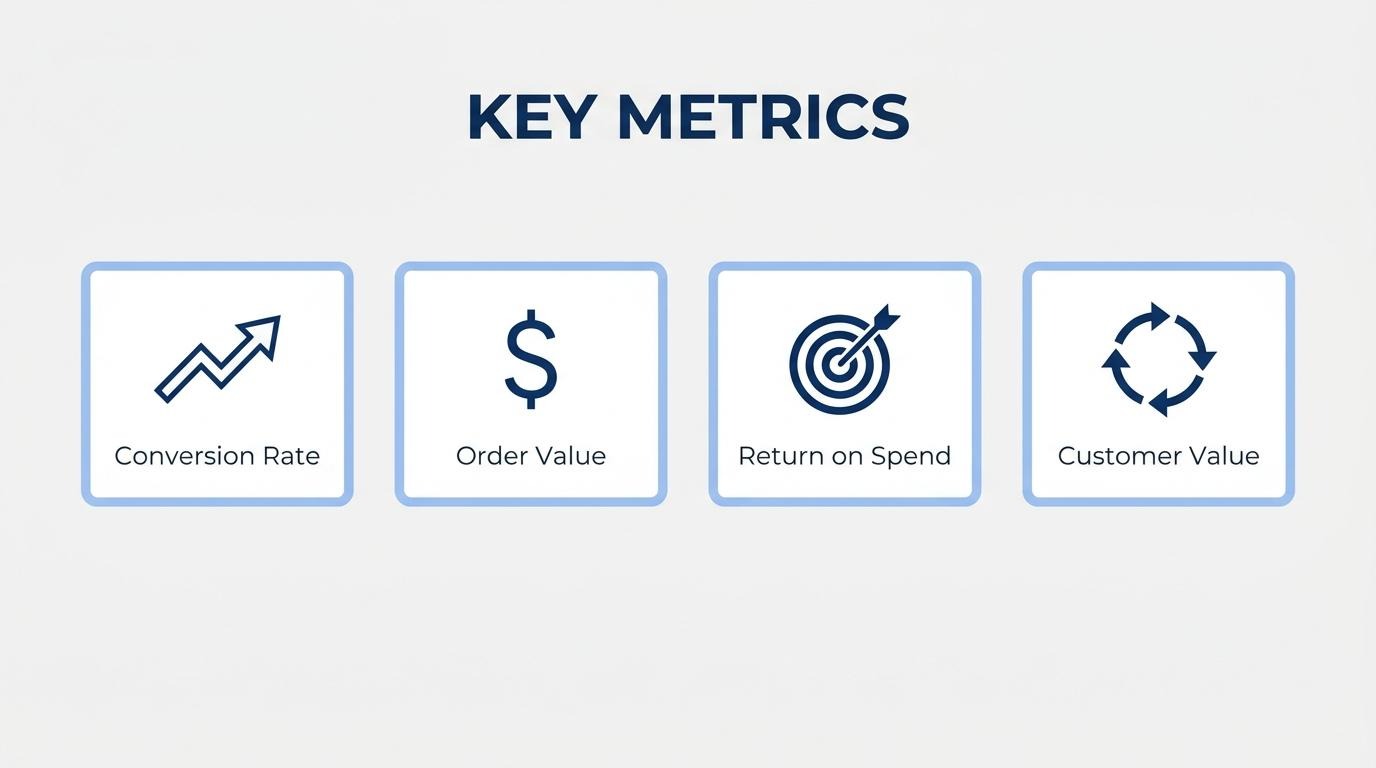
The metrics that track social shopping revenue accurately include conversion rate, average order value, return on ad spend, and customer lifetime value. These KPIs connect social activity directly to sales outcomes rather than vanity signals like follower counts.
Key revenue-focused metrics to monitor:
According to a 2025 report by The Hub, shoppers exposed to omnichannel marketing demonstrate an average order value of $66.31 compared to $58.70 for single-channel efforts, a 13% increase. That gap alone justifies measuring AOV by channel rather than relying on aggregate figures. Brands that treat social as a single bucket miss where margin actually concentrates.
You attribute conversions across multiple social channels by combining platform-native analytics with a unified tracking layer that resolves touchpoints to a single customer record. No individual platform's attribution model tells the full story, because each one claims credit for the same conversion differently.
Practical steps for multi-channel attribution:
SHOPLINE's social integration supports messaging event reporting, which assesses ad effectiveness on social platforms, giving brands one place to reconcile what each channel actually contributed. For scaling DTC brands running across three or more social storefronts, fragmented attribution is one of the fastest ways to misallocate budget. Centralizing this data early prevents compounding errors as spend grows.
With performance measurement in place, the next step is connecting social shopping to a broader omnichannel strategy.
Social shopping fits into an omnichannel retail strategy by turning social platforms into active selling channels that share data, inventory, and customer records with a brand's existing storefront and CRM.
Rather than operating social as an isolated awareness channel, omnichannel integration connects discovery, purchase, and post-sale service into one measurable system. According to a 2025 report from The Hub, shoppers exposed to omnichannel marketing demonstrate an average order value of $66.31 compared to $58.70 for single-channel efforts, a 13% increase. That lift reflects what happens when social shopping data feeds the same customer profile that powers email, retention, and in-store interactions.
The practical requirements for making this work include:
When social shopping operates inside a fragmented tool stack, brands lose the context that makes omnichannel valuable. A customer who discovers a product on TikTok, asks a question via Instagram DM, and converts on the website should appear as one person with one journey, not three disconnected touchpoints. Brands still running separate systems for each channel often find that their "omnichannel strategy" is really just multichannel selling with no shared intelligence.
For scaling DTC brands already managing complexity across five or more tools, consolidating social shopping data into a unified commerce platform eliminates the reconciliation work that slows execution and fragments customer insight. Understanding what happens when all that social data lives in one system reveals the real operational advantage.
Social shopping data living in one system eliminates the fragmentation that erodes customer insight and slows marketing execution. Below, we cover how SHOPLINE consolidates social shopping with CRM and marketing, followed by key takeaways on social shopping benefits and best practices.
SHOPLINE unifies social shopping with CRM and marketing by running commerce, customer data, and lifecycle automation inside a single platform with a shared data layer. Social interactions from Live Shopping, Post Shopping, and the Message Center feed directly into the same customer record that powers email, SMS, and retention workflows.
This architecture resolves a common pain point for scaling DTC brands: reconciling siloed data from separate social tools, a standalone CRM, and a third-party marketing platform. On SHOPLINE, messaging event reporting assesses ad effectiveness on social platforms while tying those signals back to individual customer profiles. According to SHOPLINE's enterprise documentation, the platform provides comprehensive integration with ERP, OMS, 3PL, and CRM systems to ensure maximum operational efficiency.
For brands operating at $1M to $50M+ in revenue, consolidating social shopping data into one system is often the difference between reactive campaigns and proactive lifecycle marketing built on complete customer context.
The key takeaways about social shopping benefits and best practices center on three priorities: meeting buyers where they already browse, reducing friction at checkout, and turning social engagement into long-term retention.
According to a 2025 report by The Hub, shoppers exposed to omnichannel marketing demonstrate an average order value of $66.31 compared to $58.70 for single-channel efforts. The brands extracting the most value from social shopping are those treating it not as an isolated tactic, but as a connected layer within their broader commerce and retention strategy.