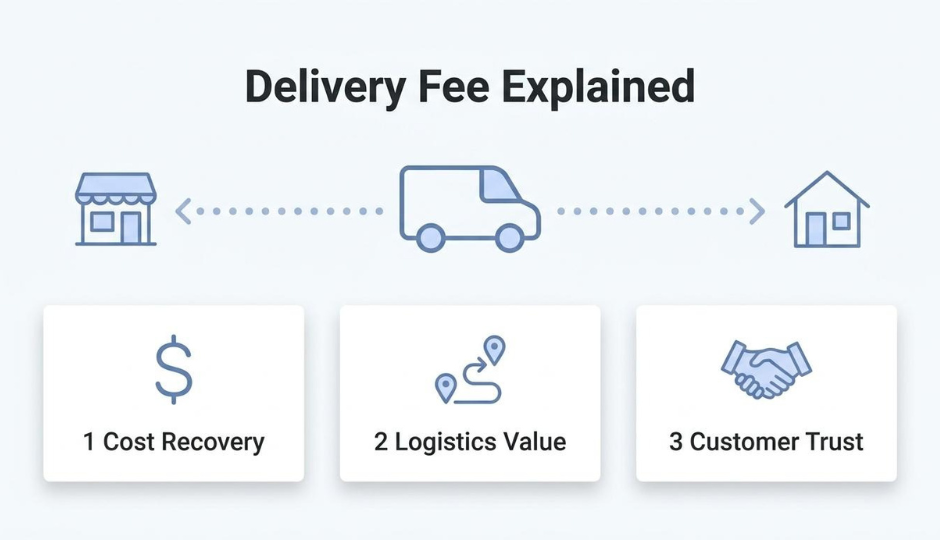
A delivery fee is a charge added to an order to cover the cost of transporting goods from a business to the customer's location. Local businesses charge delivery fees because last-mile fulfillment involves real operational expenses, including driver labor, fuel, vehicle maintenance, packaging, and routing technology.
These fees serve a dual purpose: they recover logistics costs that would otherwise erode margins, and they signal to customers that delivery is a distinct service with tangible value. According to SmartRoutes, last-mile delivery accounts for an estimated 53% of the total cost of shipping for local and e-commerce businesses. That concentration of cost at the final leg explains why even small local operations cannot absorb delivery expenses indefinitely without a pricing mechanism.
For most local businesses, the alternative to charging a delivery fee is embedding those costs into product prices, which can make items appear less competitive against non-delivery competitors. A transparent fee structure, when communicated clearly, often preserves both margin health and customer trust.
Local businesses calculate delivery fees using models based on distance, weight, order value, or time sensitivity. The following subsections break down flat-rate, distance-based, weight-based, threshold, and same-day fee structures.
Flat-rate delivery fees are determined by setting a single fixed charge applied to every order regardless of distance, weight, or contents. Businesses calculate this rate by averaging their total delivery costs across all orders, then rounding to a simple, predictable number customers can anticipate at checkout.
The simplicity of flat-rate pricing reduces friction during purchase decisions. However, businesses using third-party platforms face additional layered costs beyond their own flat fee. According to a 2024 CNBC report, standard marketing commissions on platforms like Grubhub range between 5% and 10% per order, excluding separate order processing and delivery charges. For operators absorbing both their own logistics costs and platform commissions, the flat rate must account for these combined expenses to remain sustainable.
Distance-based delivery fees work by charging customers more as the delivery destination moves farther from the business location. Merchants typically define concentric delivery zones, each carrying a progressively higher fee.
This model reflects real operational economics. The farther a driver travels, the higher the fuel, time, and vehicle wear costs become. Most local businesses structure zones in increments, such as:
Distance-based pricing rewards nearby customers with lower fees while ensuring remote deliveries remain profitable. For brands managing multiple fulfillment points, zone logic becomes essential to avoid subsidizing long-haul orders with revenue from short trips.
Weight or size-based delivery fees are calculated by applying a per-unit rate (per pound, per kilogram, or per dimensional bracket) to the total shipment. Heavier or bulkier orders cost more because they consume more vehicle capacity and require greater handling effort.
This model suits businesses shipping physical goods with wide weight variation, such as home goods retailers or beverage brands. Common approaches include:
Weight-based pricing prevents a situation where a single heavy order erodes margins that lighter orders would otherwise sustain.
Order-value thresholds affect delivery fees by reducing or eliminating the delivery charge once a customer's cart reaches a specified minimum spend. This model incentivizes larger orders while absorbing delivery costs into higher margins on bigger transactions.
The psychology behind thresholds is well-documented. According to a 2024 National Retail Federation report, 51% of shoppers add items to their cart specifically to meet a free shipping threshold. Businesses set the minimum just above their average order value to nudge spending upward without making the target feel unreachable. A business averaging $35 per order, for instance, might set free delivery at $50, capturing incremental margin that offsets the shipping subsidy.
Time-sensitive or same-day delivery fees differ by charging a premium that reflects the higher operational cost of expedited fulfillment. Rush orders compress routing efficiency, limit batching opportunities, and often require dedicated driver assignments rather than consolidated multi-stop runs.
Same-day surcharges typically range from $5 to $15 above standard delivery rates, depending on the market and distance. Businesses offering tiered speed options give customers control over how much urgency costs them, which preserves conversion among price-sensitive buyers while capturing premium willingness from those who need immediacy.
Understanding each calculation model helps businesses match their fee structure to actual cost drivers, which the next section explores in detail.
The costs included in a local delivery fee are driver wages, fuel and vehicle maintenance, packaging materials, and delivery technology. Each component contributes a measurable share to the final price customers see at checkout.
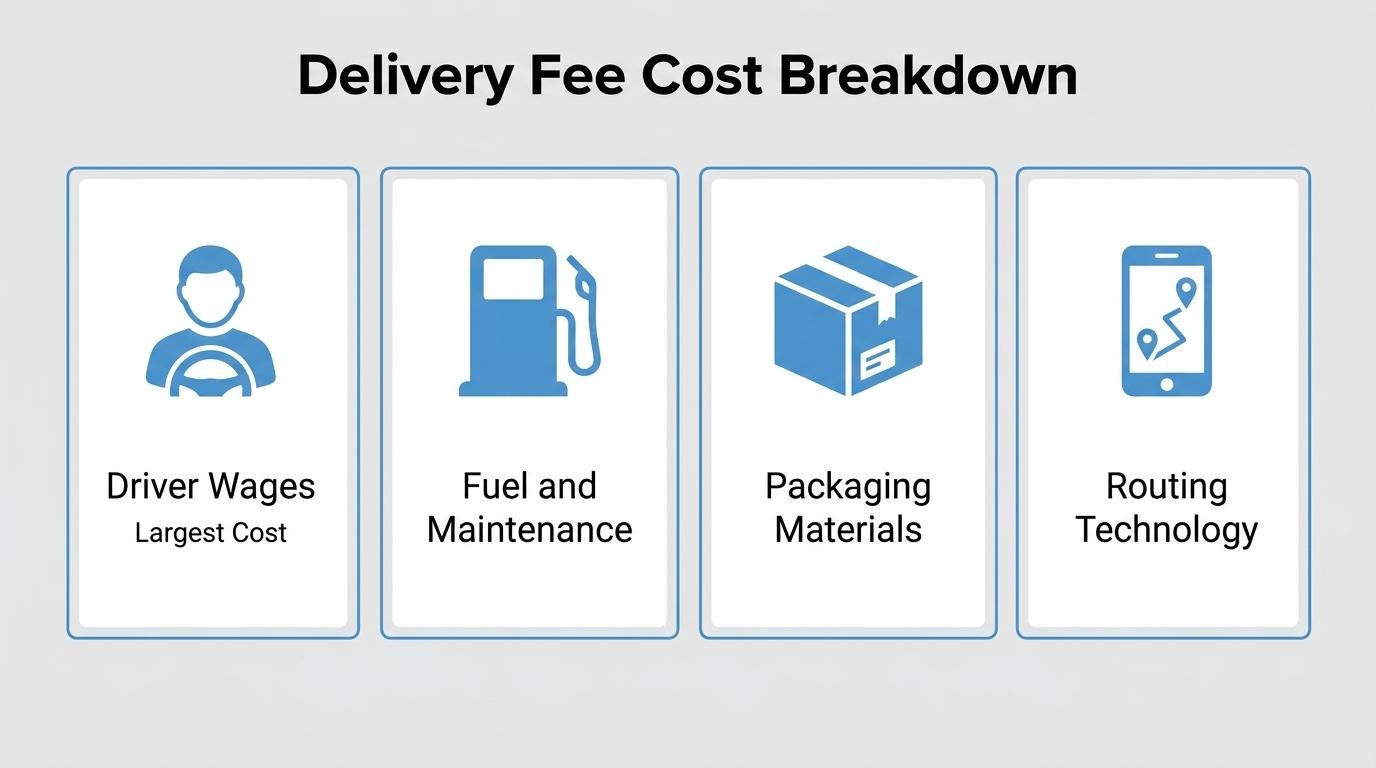
Driver wages and labor factor into delivery fees as the single largest line item, typically covering hourly pay, benefits, and time spent per stop. For local businesses, this cost creates pressure to absorb fees rather than display them, since visible charges directly affect conversions. According to the National Retail Federation, 47% of shoppers would abandon a purchase if they did not qualify for free delivery, while 51% reported adding items to meet a free shipping threshold. This consumer sensitivity means businesses must balance fair driver compensation against the risk of losing sales at checkout.
Fuel and vehicle maintenance affect the fee by adding variable costs that fluctuate with distance, route density, and fuel prices. Gasoline, insurance, tire replacement, oil changes, and depreciation all compound into per-mile operating expenses. For local deliveries covering shorter distances, these costs per order remain lower than long-haul shipping, but they still represent a meaningful percentage of the total fee. Businesses operating their own delivery fleet absorb these costs directly, while those using third-party couriers pay them indirectly through platform commissions.
Packaging and handling costs get passed along through the delivery fee or built into product pricing. These costs include boxes, protective inserts, tape, labels, and the labor time required to pick, pack, and stage each order. For fragile or temperature-sensitive goods, specialized packaging drives this component higher. Most local businesses fold packaging into a blended delivery charge rather than listing it separately, making it invisible to the customer but still a real operational expense that shapes overall fee calculations.
Delivery software or routing technology adds cost through monthly platform subscriptions, per-delivery transaction fees, and integration expenses. Route optimization tools, real-time tracking systems, and automated dispatch software all carry recurring charges that get distributed across each order. However, this investment prevents far greater losses. According to Enterprise Times, failed delivery attempts average $17.20 per order and can total nearly $200,000 in annual losses for mid-sized retailers. Routing technology reduces failed attempts by optimizing delivery windows and confirming customer availability, making it a cost that ultimately protects margins.
With these cost components understood, the next question is who ultimately pays the delivery fee.
The delivery fee is typically paid by the customer, the business, or a combination of both, depending on the pricing strategy and sales channel. The sub-sections below cover when customers absorb the full cost, when businesses subsidize it, and when third-party platforms share the fee burden.
The customer absorbs the full delivery fee when a business passes the entire logistics cost through as a line item at checkout. This approach is most common for low-margin businesses, small-basket orders, or brands without the volume to subsidize shipping costs.
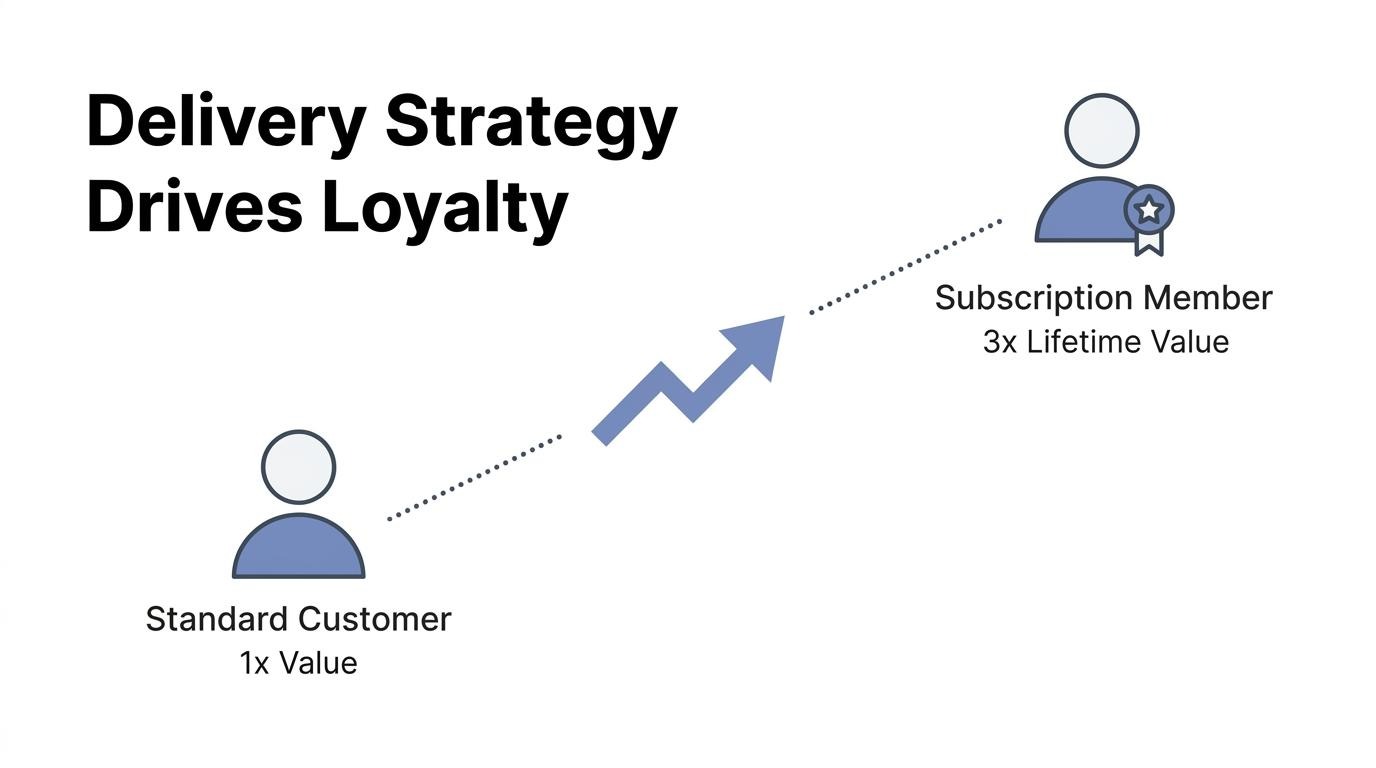
Subscription and loyalty models shift this dynamic. According to internal client data from Amazon Advertising, customers enrolled in a delivery subscription or loyalty program carry a lifetime value three times higher than non-member customers. That premium justifies absorbing fees upfront in exchange for long-term revenue. For most local businesses operating without a membership tier, though, the customer-pays model remains the default starting point.
The business subsidizes part of the delivery fee when it absorbs a portion of logistics costs to reduce friction at checkout and increase conversion rates. Common triggers for partial subsidization include:
Partial subsidization works best when the incremental revenue from higher order values or improved conversion exceeds the delivery cost absorbed. Businesses treating delivery subsidies as a blanket policy without tracking unit economics often erode margins faster than they realize.
The delivery fee is shared with a third-party platform when a business uses marketplace or aggregator services that handle logistics in exchange for commissions, service fees, or revenue splits. DoorDash, Uber Eats, and Instacart are common examples in the U.S. market.
According to DoorDash's 2024 Economic Impact Report, U.S. merchants generated over $40 billion in sales through the platform, with 85% of surveyed businesses reporting they would have lower overall revenue without its delivery infrastructure. That reach comes at a cost: platforms typically layer commissions, delivery fees, and service charges across both the merchant and the consumer.
Transparency remains a regulatory flashpoint. The FTC reached a $60 million settlement with Instacart in late 2025 over allegations of falsely advertising "free delivery" while burying undisclosed service fees until final checkout. For local businesses relying on these platforms, the trade-off is clear: expanded customer access in exchange for reduced per-order margin and limited control over how fees appear to the buyer.
Understanding who absorbs what portion of the fee directly shapes how delivery pricing influences purchase decisions and repeat behavior.
Delivery fees directly influence whether customers complete purchases, how much they spend per order, and whether they return. The sections below cover cart abandonment triggers, free-delivery incentives, and subscription models.
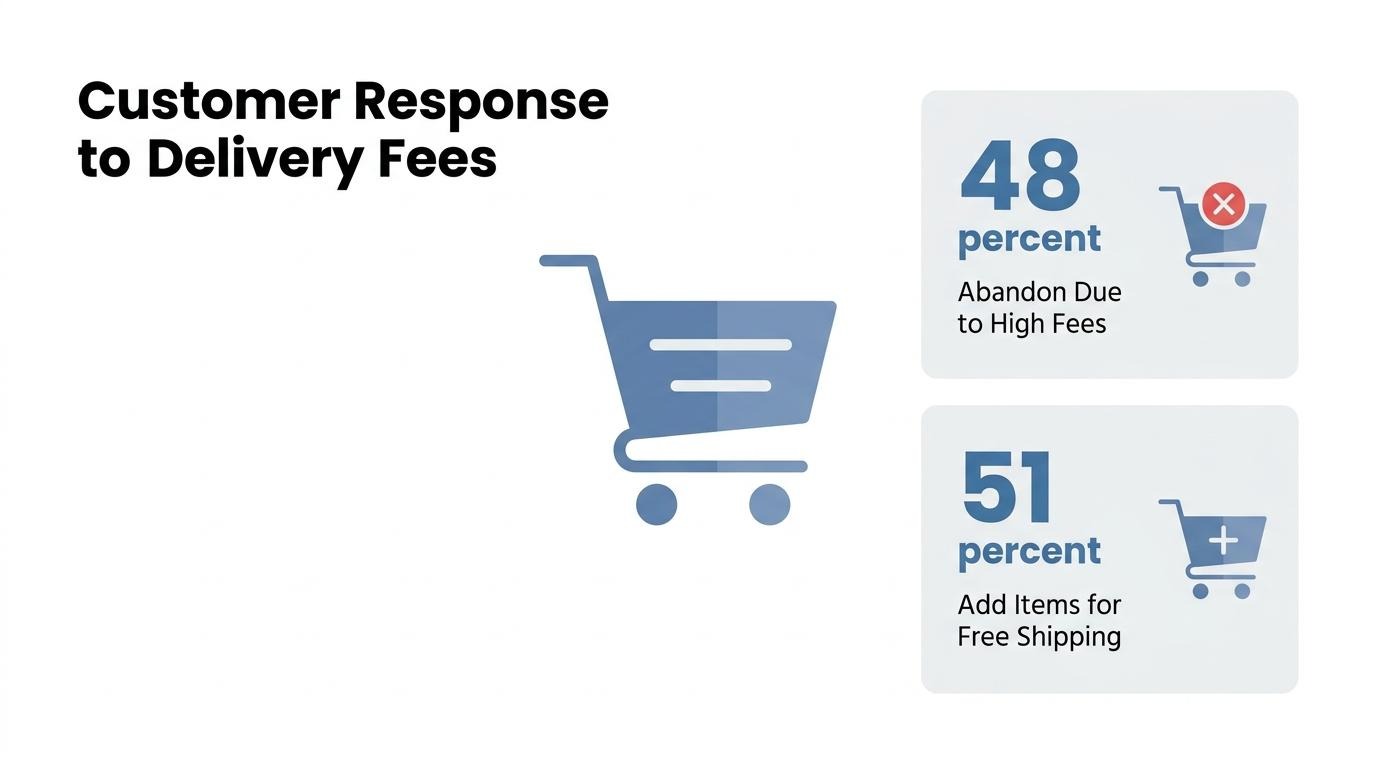
A visible delivery fee changes cart abandonment by creating a cost surprise that triggers purchase hesitation at checkout. According to the Baymard Institute, unexpectedly high extra costs such as shipping and delivery fees are the primary reason for cart abandonment, cited by 48% of online shoppers as the reason they did not complete a purchase.
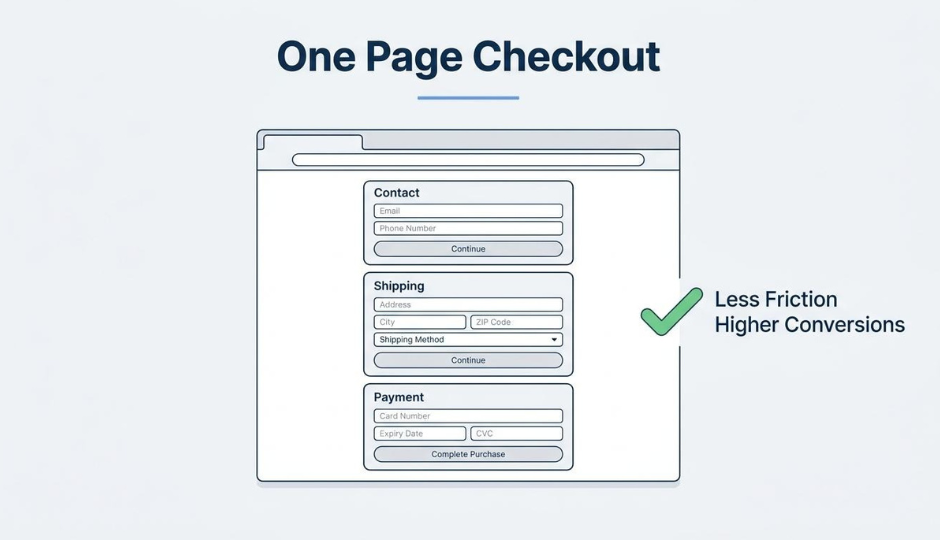
This makes fee transparency critical. Displaying delivery costs early in the shopping flow, rather than revealing them at the final step, reduces the psychological shock that drives abandonment. For local businesses operating on tighter margins, even a $5 fee shown too late can erode conversion rates built through upstream marketing spend.
Free-delivery messaging affects average order value by motivating shoppers to add items until they reach a qualifying threshold. When customers see a "free delivery over $X" banner, spending increases to clear that minimum.
Context matters when setting that threshold. As of late 2025, the average shipping cost per e-commerce order across all verticals stands at $7.96, according to OpenSend, though this fluctuates by product category and distance. Restaurant delivery fees averaged approximately $5.96 in 2024, down 15% from nearly $7 in 2022. Setting a free-delivery minimum just above typical order value, while absorbing a fee in this range, is one of the most reliable levers for lifting basket size without discounting product prices.
Subscription or membership models offset delivery costs by converting per-order fees into predictable recurring revenue while locking in repeat purchasing behavior. According to Saras Analytics, Amazon Prime maintains a 93% retention rate after the first year and 98% after the second year, demonstrating how subscription-based free delivery secures long-term loyalty.
The mechanism works because members mentally amortize their annual fee across all orders, making each individual purchase feel "free" to ship. This psychology drives higher order frequency and lifetime value. For scaling DTC brands, building a membership tier with bundled free delivery can shift the cost conversation from per-transaction friction to a retention asset.
With customer behavior patterns established, the next step is building a delivery fee pricing strategy around them.
Local businesses should set delivery fee pricing strategy by benchmarking against competitors, testing incremental changes, and adjusting for demand fluctuations. The following subsections cover competitive benchmarking, safe testing methods, and peak-demand adjustments.
You benchmark fees against local competitors by auditing their checkout flows, comparing published delivery charges, and mapping those fees against your own cost structure. Start by placing test orders or reviewing pricing pages for 5–10 direct competitors within your delivery radius. Record their fee type (flat-rate, tiered, or threshold-based), dollar amounts, and any free-delivery minimums.
According to QSR Magazine, the average delivery fee for restaurant orders was approximately $5.96 in 2024, representing a 15% decrease from nearly $7 in 2022 as operators adjusted pricing to remain competitive. This downward pressure makes regular benchmarking essential. Position your fee within the local range rather than at the extremes; pricing slightly below average signals value without eroding margins.
You test fee structures without losing customers by making small, isolated changes and measuring conversion impact before committing to a permanent shift. Run A/B tests on a single variable at a time, such as raising a flat fee by $1 or lowering the free-delivery threshold by $10.
Key testing principles include:
For brands managing delivery logic across DTC and in-store from one backend, platforms like SHOPLINE make it straightforward to adjust fee rules per channel without rebuilding checkout flows each time.
You adjust fees for peak demand or seasonal surges by implementing dynamic or tiered pricing that reflects real-time cost increases in labor, fuel, and route density. Holiday periods, severe weather, and promotional events all compress delivery capacity, raising per-order costs.
Practical approaches include:
Consumer psychology research from McKinsey shows that reliability and predictability in delivery timing now influence purchasing decisions more than raw speed. Communicating realistic delivery windows during surges, rather than over-promising, preserves trust even when fees rise temporarily.
With demand-based adjustments in place, choosing the right fee model determines how these strategies scale across your product catalog.
Common delivery fee models for local ecommerce include flat-rate pricing, zone-based tiers, dynamic checkout calculations, minimum-spend thresholds for free delivery, and subscription-based unlimited shipping.
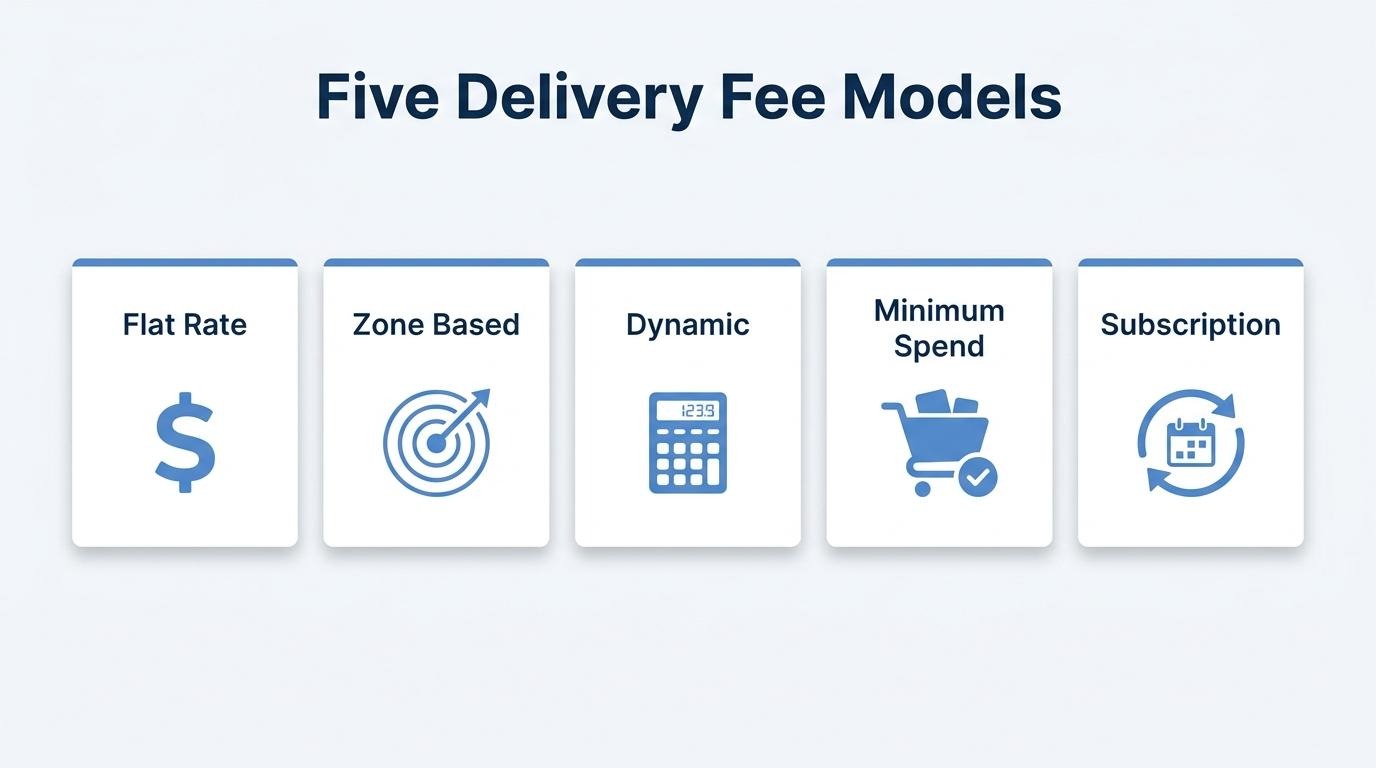
A flat-rate fee per order charges every customer the same fixed amount regardless of distance, weight, or cart size. This model simplifies checkout by removing pricing variability. According to a last-mile delivery guide from Ecommerce Fulfilment, failed delivery attempts average $17.20 per order, which means flat-rate structures must account for these hidden costs when setting the fixed price point. Flat-rate works best for businesses with a tight delivery radius and consistent order profiles, where operational costs remain predictable enough to absorb into one standard charge.
A tiered fee based on delivery zone assigns different price levels according to a customer's distance from the fulfillment location. Businesses define concentric zones, each carrying a progressively higher fee. This model reflects actual cost more accurately than flat-rate pricing, since last-mile delivery accounts for an estimated 53% of total shipping costs. Zone-based tiers let merchants serve wider areas without subsidizing far-flung deliveries at the expense of nearby customers. For most local operators, three to five zones strike the right balance between pricing precision and checkout simplicity.
A dynamic fee calculated at checkout adjusts the delivery charge in real time based on variables such as distance, order weight, package dimensions, or current demand. The system pulls live data at the moment of purchase to generate a precise cost. While this model offers the most accurate cost recovery, it introduces unpredictability for shoppers. Since 48% of online buyers abandon carts due to unexpectedly high extra costs, merchants using dynamic fees should display estimated ranges early in the shopping flow, well before the final checkout screen.
Free delivery above a minimum spend waives the shipping charge once a customer's cart reaches a set dollar threshold. This model directly increases average order value. According to the National Retail Federation, 51% of shoppers reported adding items to their cart specifically to meet a free shipping threshold. The key is setting the minimum just above the store's natural average order size, typically 20–30% higher. Set it too high, and customers feel manipulated; set it too low, and the business absorbs delivery costs without meaningful revenue gain.
Subscription-based unlimited delivery charges customers a recurring fee in exchange for free or discounted shipping on every order during the membership period. Amazon Prime demonstrates the model's retention power, maintaining a 93% retention rate after the first year and 98% after the second year, according to Saras Analytics. For local ecommerce brands, even a modest monthly membership can lock in repeat purchasing behavior and dramatically increase customer lifetime value. This model rewards high-frequency buyers while generating predictable recurring revenue that offsets fulfillment costs.
With delivery models defined, the next step is understanding how fees vary across specific business verticals.
Delivery fees differ across local business verticals based on product weight, perishability, order value, and fulfillment urgency. The following subsections break down fee structures for food and beverage, fashion and apparel, home goods, and beauty brands.
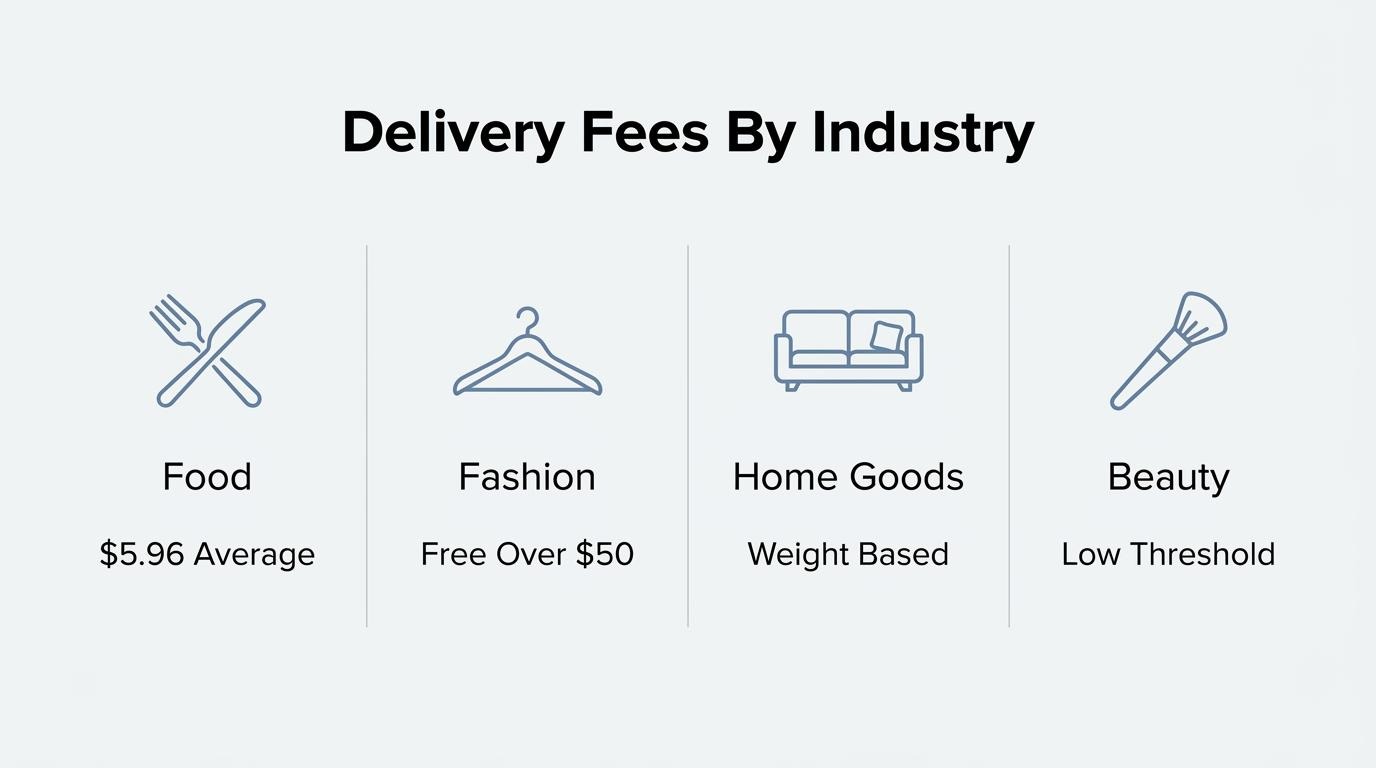
Food and beverage brands structure delivery fees using a combination of flat-rate charges, distance-based pricing, and platform commissions that reflect perishability and time sensitivity. Restaurant orders averaged approximately $5.96 in delivery fees during 2024, while third-party platforms layer additional service fees and marketing commissions ranging from 5% to 10% per order.
Regulatory scrutiny is intensifying around these layered charges. In April 2026, the Federal Trade Commission proposed new rules targeting online food and grocery delivery platforms that fail to disclose total pricing, including all mandatory fees, before checkout. For food brands operating their own delivery, transparent fee disclosure is no longer optional; it is a compliance requirement that also reduces cart abandonment.
Fashion and apparel brands handle delivery costs primarily through free-shipping thresholds and flat-rate pricing tied to order value. Because garments are lightweight relative to their price, absorbing shipping into product margins is feasible once average order values exceed a predictable baseline.
Common approaches include:
Returns complicate the equation significantly. Apparel's high return rate means brands must factor reverse logistics into their delivery fee strategy, not just outbound cost.
Home goods brands price delivery for bulky items using weight-based or dimensional-weight calculations that reflect the disproportionate cost of shipping oversized products. Furniture, appliances, and large décor items often require specialized carriers, white-glove service, or freight shipping rather than standard parcel delivery.
Typical pricing structures include:
Failed delivery attempts hit this vertical especially hard, since rescheduling oversized shipments multiplies costs quickly. Clear delivery scheduling and address verification become essential margin protections.
Beauty brands approach low-weight delivery pricing by leveraging small package sizes to offer aggressive free-shipping thresholds or low flat-rate fees. Products like serums, cosmetics, and skincare are compact and lightweight, making standard parcel shipping economical even at modest order values.
This weight advantage allows beauty brands to:
For brands scaling beyond a single fulfillment channel, consolidating delivery logic across DTC and retail under one system eliminates the manual reconciliation that fragments margin visibility.
Technology plays a central role in managing delivery fees by automating calculations, optimizing routes, and reducing costly errors. Unified commerce platforms, route optimization software, and real-time pricing engines help local businesses control last-mile costs while maintaining transparent pricing for customers.
Route optimization software reduces failed deliveries, which according to Enterprise Times average $17.20 per order and can total nearly $200,000 in annual losses for mid-sized retailers. Automated delivery fee logic eliminates manual pricing errors across channels, applying weight-based, distance-based, or zone-based rules at checkout without staff intervention. Real-time carrier rate comparison tools let merchants select the most cost-effective option per order, particularly important given that last-mile delivery accounts for an estimated 53% of total shipping costs. For brands managing both online and in-store fulfillment, platforms with integrated backends keep fee structures consistent across every sales channel, preventing the pricing discrepancies that erode customer trust.
Delivery fees connect to customer retention and LTV by shaping how often customers return and how much they spend over time. Predictable or subsidized delivery costs reduce friction at checkout, encouraging repeat purchases that compound into higher lifetime value.
Subscription-based delivery models demonstrate this connection most clearly. According to Saras Analytics, Amazon Prime maintains a 93% retention rate after the first year of membership and 98% after the second year, proving that bundled free delivery locks in long-term buying behavior. When delivery feels "free" through a membership, customers order more frequently and consolidate purchases within a single ecosystem rather than shopping across competitors.
For local businesses without subscription infrastructure, the principle still applies. Every delivery fee interaction is a retention decision point. Customers who encounter consistent, transparent fees develop trust and return; those surprised by hidden charges churn. Internal client data suggests customers enrolled in delivery subscriptions or loyalty programs carry a lifetime value three times higher than non-members.
This makes delivery fee strategy less about per-order profitability and more about cumulative relationship economics. A business absorbing $5 per delivery on a customer who orders 40 times annually is investing $200 to retain potentially thousands in revenue. The fee itself becomes a retention lever, not just a cost-recovery mechanism.
With retention economics clarified, the next consideration is how unified systems simplify fee management across channels.
Managing delivery fees changes when online and offline orders share one system by eliminating duplicate fee configurations and syncing pricing logic across channels. Below, the subsections cover how SHOPLINE handles this natively and the key takeaways for local businesses.
SHOPLINE handles delivery fee logic across DTC and POS without separate tools by running both channels from a single integrated backend. Merchants configure flat-rate fees, weight-based calculations, and custom shipping zones once; the same rules apply whether a customer orders online or opts for local delivery through an in-store interaction.
This eliminates the sync issues that arise when businesses manage separate delivery settings in disconnected systems. Because order data, customer records, and fulfillment logic share one platform, fee adjustments propagate instantly across all channels without manual reconciliation or third-party middleware.
The key takeaways about how delivery fees work for local businesses are:
According to SmartRoutes, last-mile delivery represents an estimated 53% of total shipping costs for local and e-commerce businesses. For brands operating at scale, consolidating delivery fee management into a single system reduces the operational drag of maintaining separate configurations across online and offline channels.