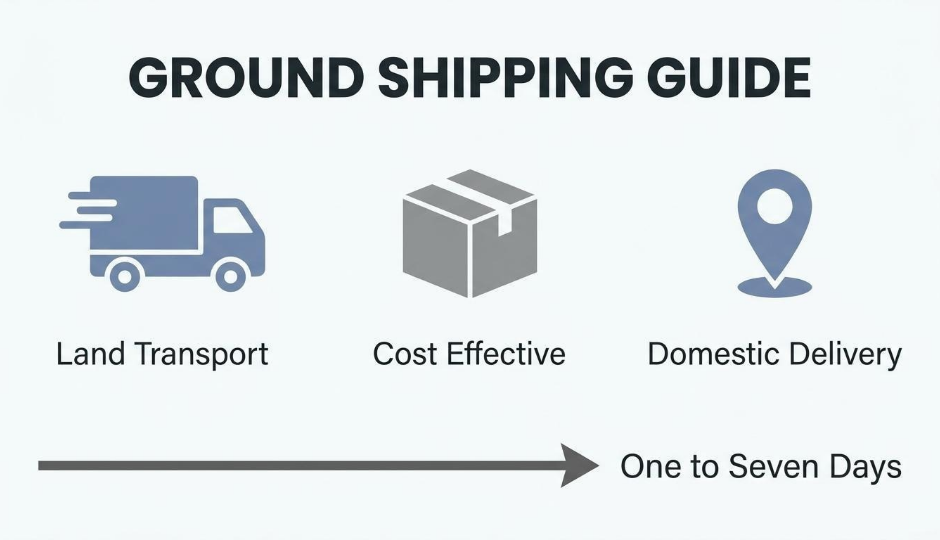
Ground shipping is the delivery of packages over land by truck, rail, or a combination of both, and it serves as the most cost-effective method for domestic ecommerce fulfillment in the United States. For most online brands, ground carriers handle the bulk of order volume because they balance reliable transit times with significantly lower per-package costs than air services.
This guide covers how ground shipping works and how long it takes, what it costs across major carriers, how to compare and choose the right carrier, the pricing variables that shift your rates, and how to avoid common fulfillment mistakes while managing multiple carriers from one system.
Transit times for ground shipping range from one business day for local deliveries to seven or more days for coast-to-coast and non-contiguous state routes. Warehouse placement and shipping zone strategy directly compress delivery windows without requiring expensive service upgrades.
Pricing varies significantly by carrier and package profile. USPS Ground Advantage offers the lowest entry point for lightweight parcels, while UPS Ground and FedEx Ground serve heavier shipments and business addresses. Surcharges for residential delivery, extended areas, and dimensional weight pricing often inflate the final invoice well beyond published base rates.
Carrier selection depends on shipment weight, destination type, and volume. Regional carriers can undercut national networks within their coverage zones, and a multi-carrier approach lets brands route each order to the most cost-effective option.
Dimensional weight divisors, shipping zones, residential surcharges, and freight class all influence what you actually pay. Brands that ignore these variables or rely on a single carrier routinely overspend by margins they never see on a rate card.
Centralizing order routing, label generation, and tracking in one platform reduces the manual errors and fulfillment gaps that quietly erode ground shipping savings at scale.
Ground shipping in ecommerce fulfillment means delivering packages to customers over land, using trucks, trains, or a combination of both, instead of air transport. It is the most common and cost-effective method for domestic orders in the United States.
According to Pitney Bowes, ground shipping is the delivery of packages via trucks, trains, or a mix of both and is often the most cost-effective option for domestic ecommerce shipments. For most online brands, this method handles the bulk of order volume because it balances reliable transit times with lower per-package costs compared to air services.
The financial impact extends beyond base shipping rates. A 2026 GoBolt analysis found that the average ecommerce brand pays $8 to $15 per order to ship, with 30% to 40% of that cost hidden in surcharges, fulfillment delays, and returns. These hidden costs make ground shipping strategy more important than the label rate alone suggests.
Operational accuracy also plays a critical role in whether ground shipping fulfillment runs smoothly. When orders are picked, packed, and labeled manually, small errors compound quickly. Brands that rely on disconnected tools for order management, label generation, and inventory tracking often find that fulfillment mistakes erode the savings ground shipping provides.
For scaling DTC brands, ground shipping is not just a carrier selection decision; it is a fulfillment systems question that touches packaging, warehouse operations, carrier negotiations, and customer expectations. The sections that follow break down how ground shipping works from pickup to delivery, what it costs across major carriers, and how to choose the right ground shipping strategy for your business.
Ground shipping works by moving packages through a sequence of stages: carrier pickup, sorting at origin facilities, linehaul transport via truck or rail, local hub sorting, and last-mile delivery to the recipient.
Once a shipment is picked up or dropped off, the carrier scans it into a regional sorting facility. Packages are then consolidated by destination zone and loaded onto linehaul trucks or rail cars for long-distance transport. Upon reaching the destination region, shipments move to a local distribution hub where they are sorted again by delivery route.
The final stage is last-mile delivery. According to Legacy Supply Chain, last-mile delivery is the final step where a package travels from the carrier's local facility to the customer's doorstep, and it is the most costly part of the entire journey. For ecommerce brands, this stage matters most because it directly shapes the customer's experience with the order.
Understanding each stage helps merchants identify where delays or cost overruns typically occur, which the following sections on transit times and pricing break down in detail.
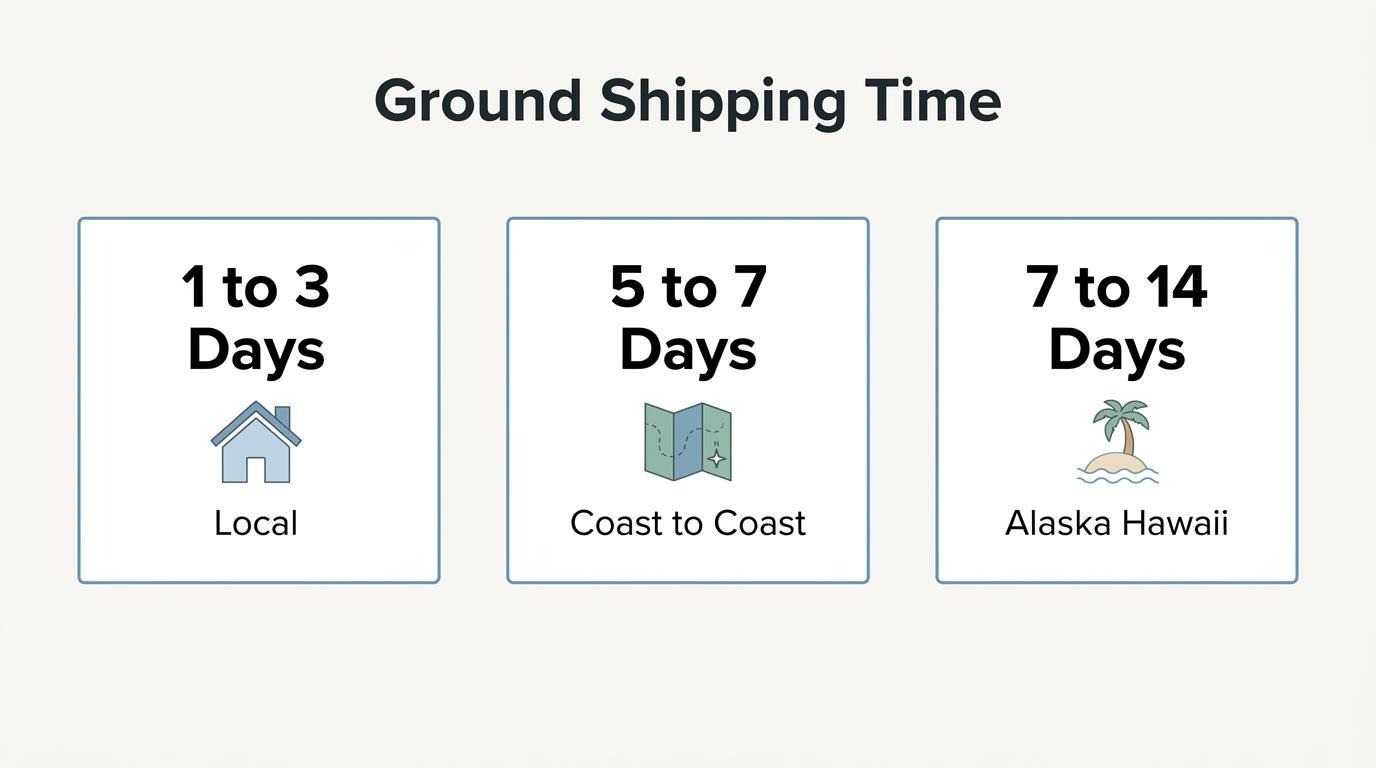
Ground shipping transit times across the US range from 1 to 8 business days, depending on distance. Local deliveries, coast-to-coast routes, and shipments to Alaska or Hawaii each follow different timelines.
Ground shipping for local deliveries typically takes 1 to 3 business days. Packages traveling within the same state or to neighboring states move through fewer sorting facilities and cover shorter distances, which keeps transit times tight.
Carriers like UPS Ground and FedEx Ground both reflect this pattern; shipments within the same shipping zone often arrive within one to two days without paying for expedited service. For ecommerce brands fulfilling orders from a warehouse positioned near their core customer base, local ground shipping can rival the speed of air options at a fraction of the cost. Strategic warehouse placement is one of the most effective ways to compress delivery windows without upgrading service tiers.
Ground shipping coast to coast takes 5 to 7 business days for most carriers. A package traveling from New York to Los Angeles, for example, crosses multiple shipping zones and passes through several regional sorting hubs before reaching the final delivery facility.
UPS Ground and FedEx Ground both publish similar coast-to-coast estimates within this range, though actual arrival dates shift based on pickup day, weather disruptions, and seasonal volume spikes. Weekends and holidays do not count as transit days for most ground services, so a Friday shipment effectively loses two days before movement resumes. Brands shipping nationally should factor these gaps into delivery-date messaging at checkout to set accurate customer expectations.
Ground shipping to Alaska and Hawaii takes 7 to 14 business days, and often longer depending on the carrier and service tier. These shipments require a multimodal process: packages travel overland to a port or consolidation facility, then move by ocean freight or barge to reach the destination state.
This extended timeline makes ground shipping to non-contiguous states significantly slower than deliveries within the lower 48. Carriers also apply additional surcharges for these routes, which can increase total cost substantially. For context, according to UPS, the Extended Area Surcharge can reach up to $61.00 per shipment as of July 2026. Brands with meaningful order volume in these states should evaluate whether regional carriers or hybrid air-ground services offer a better balance of speed and cost.
Understanding these transit windows helps when evaluating what ground shipping actually costs across different routes.
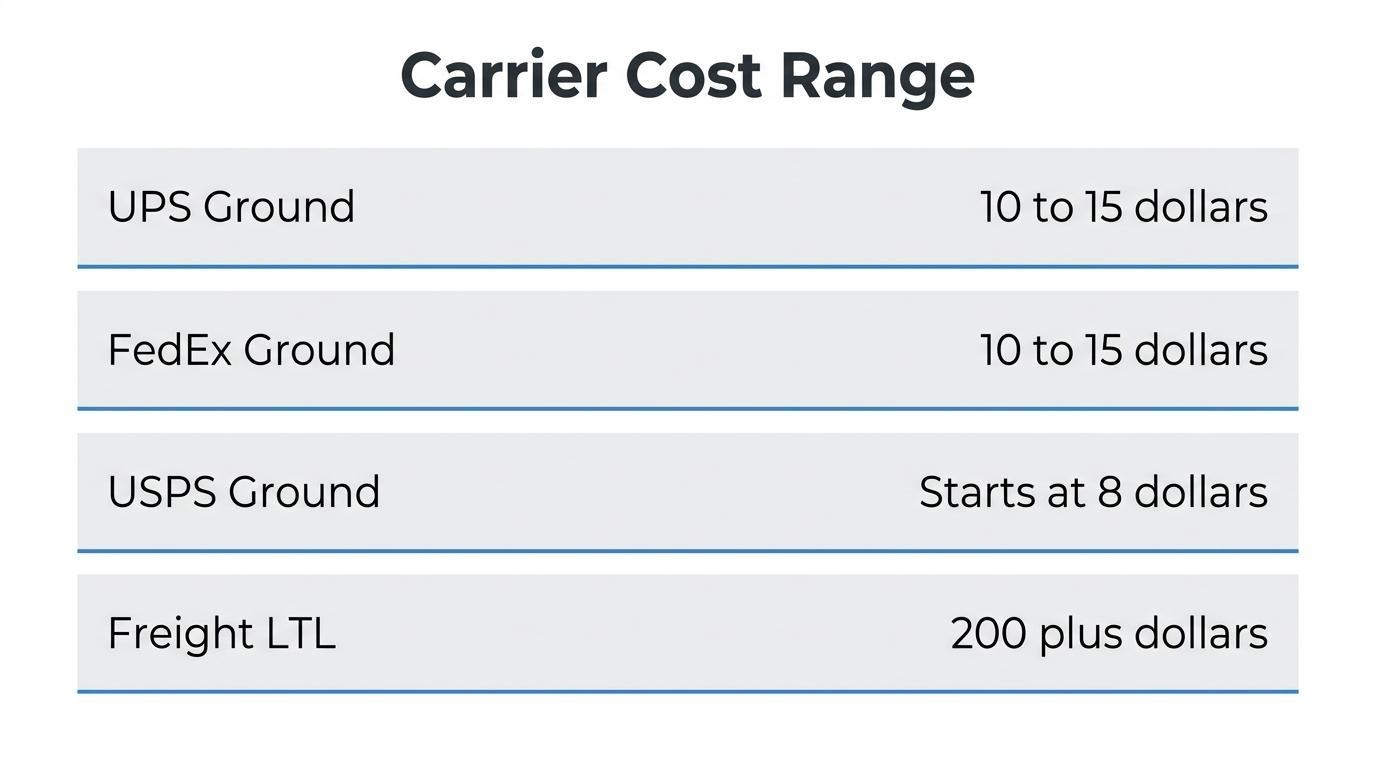
Ground shipping cost depends on the carrier, package weight, distance, and service type. The following sections break down pricing for UPS Ground, FedEx Ground, USPS Ground Advantage, and freight or LTL shipments.
UPS Ground cost for small parcels starts around $10 to $15 for lightweight packages shipping within a single zone. Actual rates depend on package weight, dimensions, origin, and destination zip code. UPS calculates the billable weight by comparing actual weight against dimensional weight (using a DIM divisor of 139) and charging whichever is greater. Surcharges add up quickly: residential delivery fees, extended area charges, and fuel surcharges all layer on top of the base rate. For most ecommerce sellers, the published rate card is only the starting point; the final invoice often runs 20% to 30% higher once accessorial fees are applied.
FedEx Ground cost for small parcels is comparable to UPS Ground, typically ranging from $10 to $15 for light packages within nearby zones. FedEx also uses a DIM weight divisor of 139 for domestic shipments, so oversized but lightweight items get priced by volume rather than actual weight. FedEx Home Delivery, which serves residential addresses, carries its own surcharge structure separate from commercial deliveries. Rate differences between FedEx and UPS tend to narrow at higher volumes, making annual spend and negotiated discounts the real differentiators. Comparing quotes from both carriers for your specific package profile is more reliable than relying on published rate cards alone.
USPS Ground Advantage costs start at $7.90 at a Post Office location, according to USPS, with a maximum weight limit of 70 lbs. This makes it one of the most affordable ground options for lightweight ecommerce parcels. Unlike UPS and FedEx, USPS does not add residential delivery surcharges, which keeps pricing more predictable for DTC brands shipping to home addresses. Ground Advantage also includes tracking and insurance up to $100. For sellers moving packages under 10 lbs, this service often undercuts private carriers by a meaningful margin, especially when shipping through Commercial Pricing tiers.
Ground shipping cost for freight and LTL ranges from $200 to $2,000 or more per shipment, depending on freight class, weight, distance, and accessorial services. Surcharges significantly impact the final price. According to UPS, the Extended Area Surcharge increased to the greater of $61.00 per shipment or $0.61 per lb effective July 6, 2026, and residential surcharges rose to $6.60 per package for standard services.
Key cost factors for freight and LTL include:
These added fees matter because unexpected shipping costs cause 48% of cart abandonment, according to EasyApps Ecommerce. For brands shipping heavier or palletized goods, building surcharges into cost projections prevents margin erosion at checkout.
Understanding carrier-specific pricing sets the foundation, but the variables that shift those rates require closer examination.
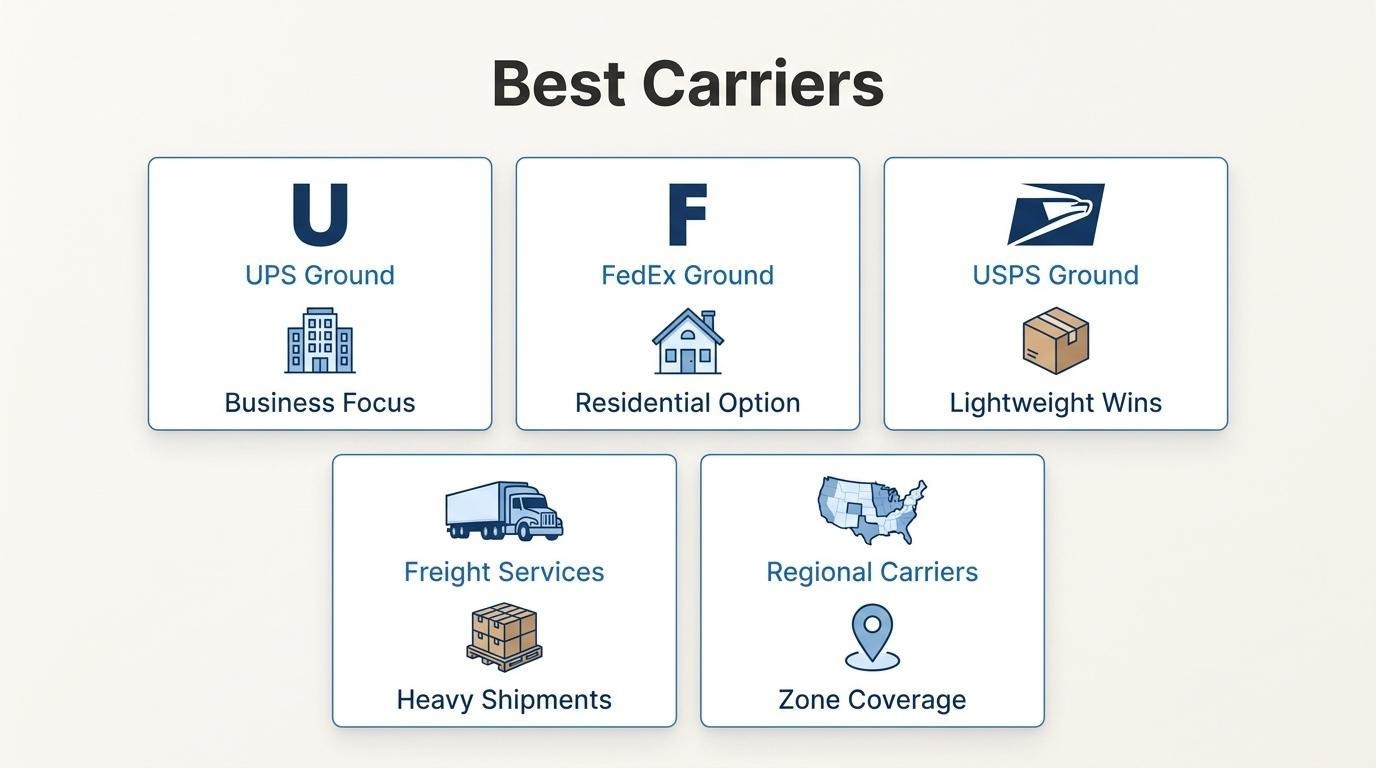
The best ground shipping carriers in the US are UPS, FedEx, USPS, and a growing roster of regional carriers. Each serves different shipment profiles, from lightweight parcels to full pallets.
UPS Ground is a parcel shipping service that delivers packages up to 150 lbs to all 50 US states. Transit times typically range from one to five business days depending on origin and destination zones. UPS Ground uses a hub-and-spoke network of sorting facilities, which makes it reliable for consistent, high-volume ecommerce fulfillment. The service applies dimensional weight pricing with a divisor of 139, so lightweight but bulky items may cost more than their actual weight suggests. For brands shipping primarily to businesses, UPS Ground remains one of the most widely used options due to its extensive commercial delivery infrastructure.
FedEx Ground and FedEx Home Delivery are two distinct services under the FedEx network. FedEx Ground handles business-to-business deliveries Monday through Friday, with transit times of one to five business days. FedEx Home Delivery targets residential addresses and includes Saturday delivery in most markets. Both services accept packages up to 150 lbs and use the same 139 DIM weight divisor as UPS. The split between commercial and residential routing gives FedEx an operational advantage when brands ship to both address types, since each service is optimized for its delivery environment rather than treating all stops identically.
USPS Ground Advantage is the US Postal Service's consolidated ground shipping product, replacing several legacy services. It handles packages up to 70 lbs with transit times of two to five business days. USPS Ground Advantage is often the most affordable option for lightweight parcels, particularly those under one pound. Because USPS delivers to every residential address in the country, including PO boxes and rural routes that private carriers surcharge heavily, it fills a coverage gap no other carrier matches. For small, lightweight DTC orders, this service frequently undercuts both UPS and FedEx on per-package cost.
UPS Freight and FedEx Freight are less-than-truckload (LTL) services designed for shipments too large for standard parcel networks. These services handle palletized goods, heavy equipment, and bulk inventory transfers between warehouses or retail locations. According to Amazon Freight, the last-mile delivery stage involves goods being sorted at a fulfillment facility and loaded onto delivery vehicles for dispatch to the end customer. LTL freight pricing is based on freight class, weight, distance, and accessorial charges rather than simple zone-based parcel rates. Brands scaling into wholesale, B2B distribution, or multi-location retail replenishment often need freight services alongside their parcel carriers.
Regional carriers are smaller shipping companies that operate within specific geographic areas, such as OnTrac in the western US or LSO in the southern US. These carriers often deliver faster and cheaper than national networks within their coverage zones because they run shorter, more direct routes. The trade-off is limited geographic reach; most regional carriers cover only a handful of states. Brands with high order density in specific regions can reduce costs by routing those shipments through a regional carrier while keeping a national carrier for the rest. A multi-carrier strategy that blends regional and national options often yields the best balance of speed, coverage, and cost.
Understanding which carriers fit your shipment profile is only part of the equation; comparing ground service against air and expedited options clarifies when each mode makes sense.
Ground shipping compares to air and expedited shipping primarily in cost, transit time, and cargo flexibility. Ground moves packages by truck or rail at lower rates but slower speeds, while air and expedited options prioritize delivery speed at a premium price.
According to Locad, ground shipping uses rail or road as its major transportation mode and has no weight or size restrictions, unlike air shipping, which imposes limitations for hazardous materials. This distinction matters for ecommerce brands shipping oversized, heavy, or regulated products that air carriers may reject or surcharge heavily.
Air shipping typically delivers within one to three business days across the continental US, whereas ground transit ranges from three to seven business days depending on distance and zone. Expedited services split the difference; they often combine ground linehaul with priority sorting to compress delivery windows without the full cost of air freight.
The key differences between ground, air, and expedited shipping are:
For most DTC brands, ground shipping handles the majority of domestic orders cost-effectively, while air and expedited options serve time-sensitive purchases or premium service tiers. The smartest approach is offering ground as the default and reserving faster methods for customers willing to pay the difference.
Understanding what drives ground shipping costs helps brands set the right thresholds for each service tier.
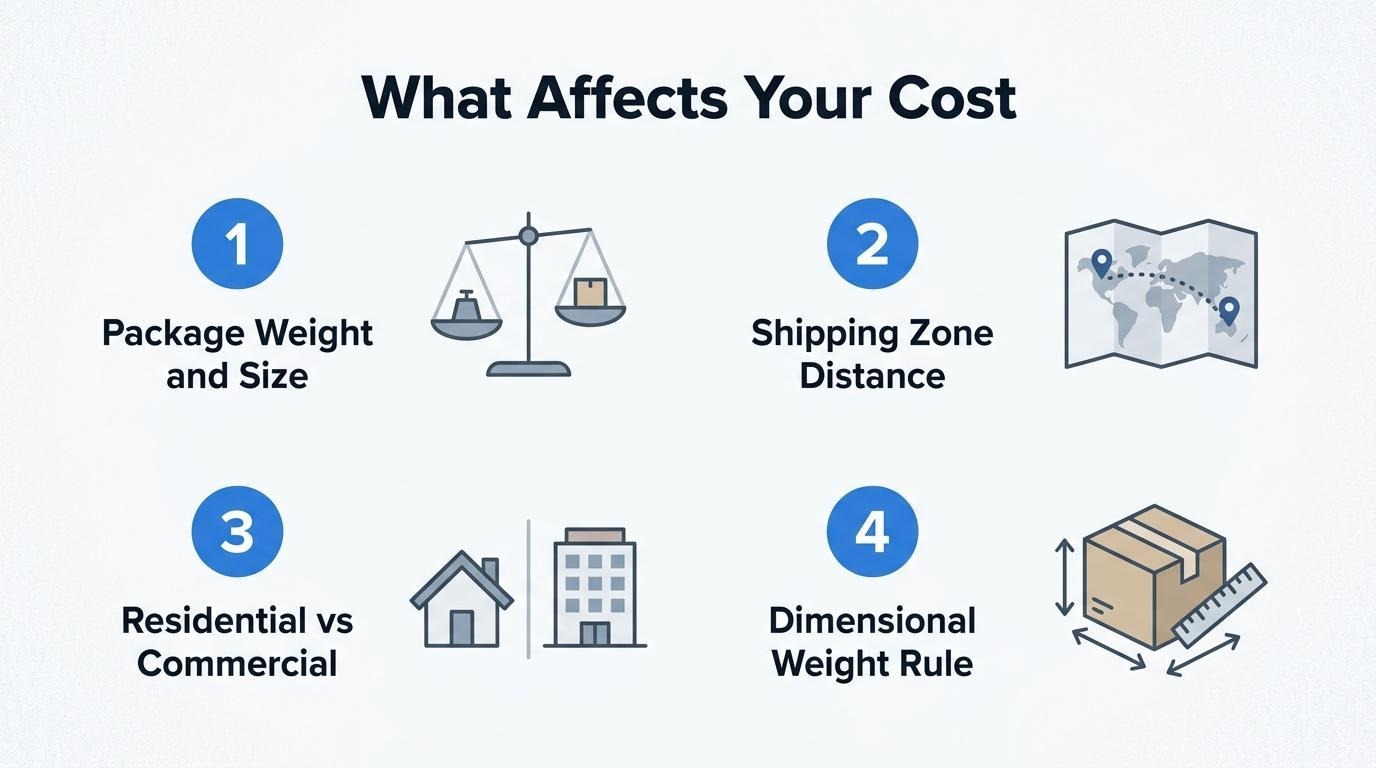
Ground shipping speed and cost depend on package characteristics, destination details, and carrier pricing rules. The sections below cover weight, distance, address type, and dimensional weight pricing.
Package weight and dimensions affect rates because carriers charge based on whichever is greater: actual weight or dimensional weight. A lightweight but bulky box often costs more than a small, heavy one since it occupies more truck space. Carriers calculate dimensional weight by multiplying length, width, and height, then dividing by a standard divisor. When the dimensional weight exceeds the actual weight, the higher figure determines the shipping rate. Reducing box size to fit products snugly is one of the simplest ways to lower ground shipping costs. Even shaving one inch off each dimension can drop a package into a cheaper rate tier.
Shipping distance and zone affect transit time because carriers divide the country into numbered zones based on how far a package travels from its origin. Zone 2 covers the shortest distances, while Zone 8 spans coast-to-coast routes. Each zone increase typically adds one to two business days and raises the per-package rate. A shipment traveling within the same zone might arrive in one to two days; cross-country deliveries through higher zones commonly take five to seven business days. Strategically placing inventory in fulfillment centers closer to major customer clusters reduces the average zone, which compresses both transit time and per-shipment cost.
Residential addresses change pricing because major carriers apply a residential delivery surcharge on top of base ground rates. Commercial locations have loading docks, regular delivery schedules, and predictable stop density, all of which lower carrier costs. Homes lack these efficiencies, so the surcharge compensates for longer driveways, fewer packages per stop, and limited access. According to Jay Group, last-mile delivery accounts for up to 53% of total shipping costs, and residential stops are a primary driver of that expense. For DTC brands shipping primarily to consumers, factoring this surcharge into margin calculations prevents underpricing shipping at checkout.
Dimensional weight pricing works by charging for the space a package occupies rather than its actual weight. Carriers multiply length by width by height in inches, then divide by a standard divisor to produce the dimensional weight. According to Packizon, UPS and FedEx use a DIM divisor of 139 for domestic US shipments, while USPS uses 166 for Priority Mail packages exceeding one cubic foot. The carrier then compares dimensional weight to actual weight and bills whichever is higher. This pricing model significantly impacts brands shipping lightweight, bulky products. Right-sizing packaging to eliminate excess void space is the most direct way to reduce dimensional weight charges.
With these cost variables mapped, the next step is deciding when free shipping makes strategic sense.
You should offer free ground shipping when your average order value and product margins can absorb the cost without eroding profitability. The decision depends on cart thresholds, competitive positioning, and customer expectations.
According to EasyApps Ecommerce, 79% of consumers say free shipping makes them more likely to purchase online, and 48% of cart abandonment is caused by unexpected shipping costs. These numbers make the case for free shipping compelling, but the execution matters more than the intention.
Free ground shipping works best in specific scenarios:
Brands that offer blanket free shipping without a margin strategy often discover that surcharges, dimensional weight pricing, and last-mile costs quietly consume profit. A smarter approach factors actual shipping expense into product pricing or sets thresholds that shift buyer behavior upward.
For scaling DTC brands managing both acquisition and retention costs, free shipping is a lever, not a default. Test threshold levels against your average order value and monitor whether the incremental revenue from larger carts offsets the absorbed shipping expense.
You negotiate better ground shipping rates at scale by reaching minimum spend thresholds, leveraging volume commitments, and using multi-carrier strategies that create competitive pressure on pricing.
According to Shippo, meaningful direct negotiation with FedEx or UPS typically requires roughly $25,000 to $50,000 or more in annual carrier spend to be assigned an account manager with real pricing flexibility. Brands below that threshold can still access discounted rates through shipping aggregators or multi-carrier platforms that pool volume across merchants.
Several strategies help scaling brands reduce per-shipment costs:
For brands shipping at scale, the negotiation itself matters less than the data you bring to it. Carriers respond to specifics: average package dimensions, zone distribution, delivery density, and seasonal volume patterns. Walking into a rate review with clean shipment data is what separates a productive negotiation from a generic discount request.
Understanding your rate structure sets the stage for avoiding the fulfillment mistakes that quietly inflate costs.
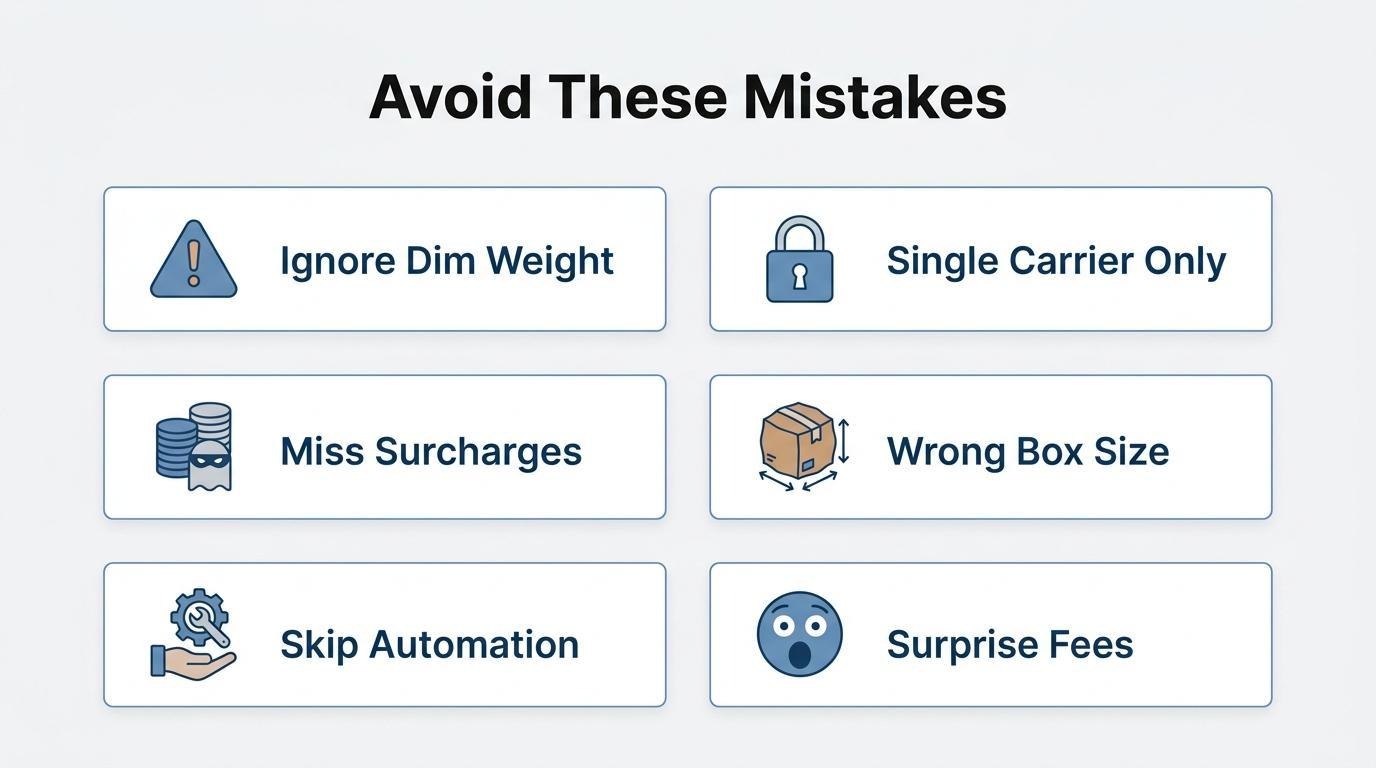
Common ground shipping mistakes DTC brands make include ignoring dimensional weight pricing, relying on a single carrier, underestimating surcharges, poor packaging choices, and failing to automate fulfillment workflows.
Most of these mistakes compound over time; a brand shipping 500 orders per week with even one unaddressed issue can lose thousands monthly in preventable costs. Addressing fulfillment errors and carrier strategy together yields the biggest margin improvement for scaling DTC operations.
You manage ground shipping across multiple carriers by centralizing order routing, label generation, and tracking within a single platform. The sections below cover how SHOPLINE unifies shipping and fulfillment, plus the key takeaways from this guide.
SHOPLINE handles shipping and fulfillment in one system by connecting order management, carrier selection, and customer data within a single platform. Instead of toggling between separate tools for label printing, inventory sync, and shipment tracking, operators manage everything from one dashboard.
This matters because manual data entry across disconnected tools produces error rates of 1% to 3%, according to a 2026 Silicon Valley Direct report on common ecommerce shipping mistakes. SHOPLINE reduces that friction by keeping order, inventory, and shipping data tied to the same backend.
Key capabilities include:
For brands shipping hundreds or thousands of orders daily, consolidating these workflows into one system eliminates the sync gaps that cause mispicks, duplicate shipments, and delayed deliveries.
The key takeaways about ground shipping and carriers center on cost control, carrier selection, and operational efficiency. Ground shipping remains the most cost-effective domestic delivery method, but the real savings depend on how well you manage the details.
Practical conclusions from this guide:
Choosing the right ground carrier is not a one-time decision; it is an ongoing operational discipline that scales with your order volume and product mix.